Anyone can collect ten supplier names from Alibaba in an afternoon. The hard part starts after that: figuring out which quotes are complete, which company actually understands the product, and which low price becomes expensive once tooling, packaging, inspection, and freight are added.
Alibaba and similar platforms are useful lead sources. They help buyers discover manufacturers, review product categories, send inquiries, and collect initial quotations. But a supplier profile should be treated as a starting point, not the final reason to select a supplier.
Two suppliers may display similar products and provide similar quotations while offering very different materials, specifications, packaging, quality controls, and levels of production experience. Until those differences are clarified, buyers are not comparing the same offer.
Quick answer
To compare suppliers properly, look beyond the product listing and unit price.
Buyers should compare:
- Product specifications and materials.
- Experience with similar products.
- What is included in the quotation.
- Customization and packaging capabilities.
- Sample quality and consistency.
- MOQ and production lead time.
- Quality-control procedures.
- Testing and documentation.
- Payment route and protection.
- Shipping terms and carton information.
- Communication quality and problem-solving ability.
The goal is not to find the supplier with the most attractive profile. It is to identify which supplier can reliably produce the required product under clearly agreed terms.
What Alibaba verification can and cannot tell you
Alibaba's Verified Supplier information says verification may include independent third-party inspection reports, supplier videos, and checks on profile, production capabilities, products, and process controls. These tools can help buyers confirm that a company exists and better understand its general capabilities.
However, verification does not answer every question about a specific sourcing project.
It does not automatically confirm that:
- The supplier has made your exact product before.
- The quotation includes every required component.
- The listed product specifications match what you need.
- The supplier understands your target market.
- The approved sample will be reproduced consistently.
- The factory can meet your packaging, testing, or delivery requirements.
- The person answering your inquiry fully understands the production process.
A supplier can be a legitimate and capable company while still being the wrong fit for a particular product.
The same caution applies on other platforms. Global Sources and Made-in-China.com can help buyers find supplier profiles and compare capabilities. Trade shows such as the Canton Fair can help buyers meet suppliers and review products directly. None of those channels removes the buyer's job of comparing evidence before placing an order.
Start with one clear specification
One of the most common supplier-comparison mistakes happens before quotations are even received.
A buyer sends several factories a product photo or online link and asks for a price. Each supplier then quotes according to its own interpretation of the product. One supplier may quote a lighter material. Another may exclude packaging. A third may assume a larger order quantity. A fourth may quote a stock product instead of a customized version.
The prices look different because the offers are different.
Before comparing suppliers, buyers should prepare a consistent sourcing brief that includes the most important requirements:
- Product dimensions and materials.
- Required functions or performance.
- Color and finish.
- Logo and customization method.
- Packaging structure.
- Estimated order quantity.
- Target market.
- Testing or certification needs.
- Shipping destination.
- Preferred trade terms.
The brief does not need to answer every technical question. Its purpose is to make sure each supplier is responding to the same basic request.
Look beyond the unit price
A quotation should be reviewed as a group of assumptions, not just a number.
When comparing prices, confirm whether each quotation includes:
- The same product dimensions and material grade.
- The same accessories or components.
- Custom colors or only stock colors.
- Logo printing, engraving, embossing, or labels.
- Retail packaging.
- Inserts, instructions, and barcode application.
- Tooling, molds, printing plates, or setup fees.
- Sample and courier costs.
- Export cartons and carton markings.
- Inspection or testing.
- Freight, duties, customs clearance, and delivery.
Ask for the same quote format from every supplier. If one supplier quotes FOB Ningbo, another quotes EXW factory, and a third gives a vague "door to door" price, the unit prices are not comparable yet. The ICC Incoterms rules exist because trade terms change cost, risk, and responsibility; a sourcing quote should name the term and place clearly.
A low unit price can become much less competitive after missing costs are added. A higher quotation may already include packaging, customization, inspection preparation, or stronger materials.
A real example: comparing laundry sheet suppliers
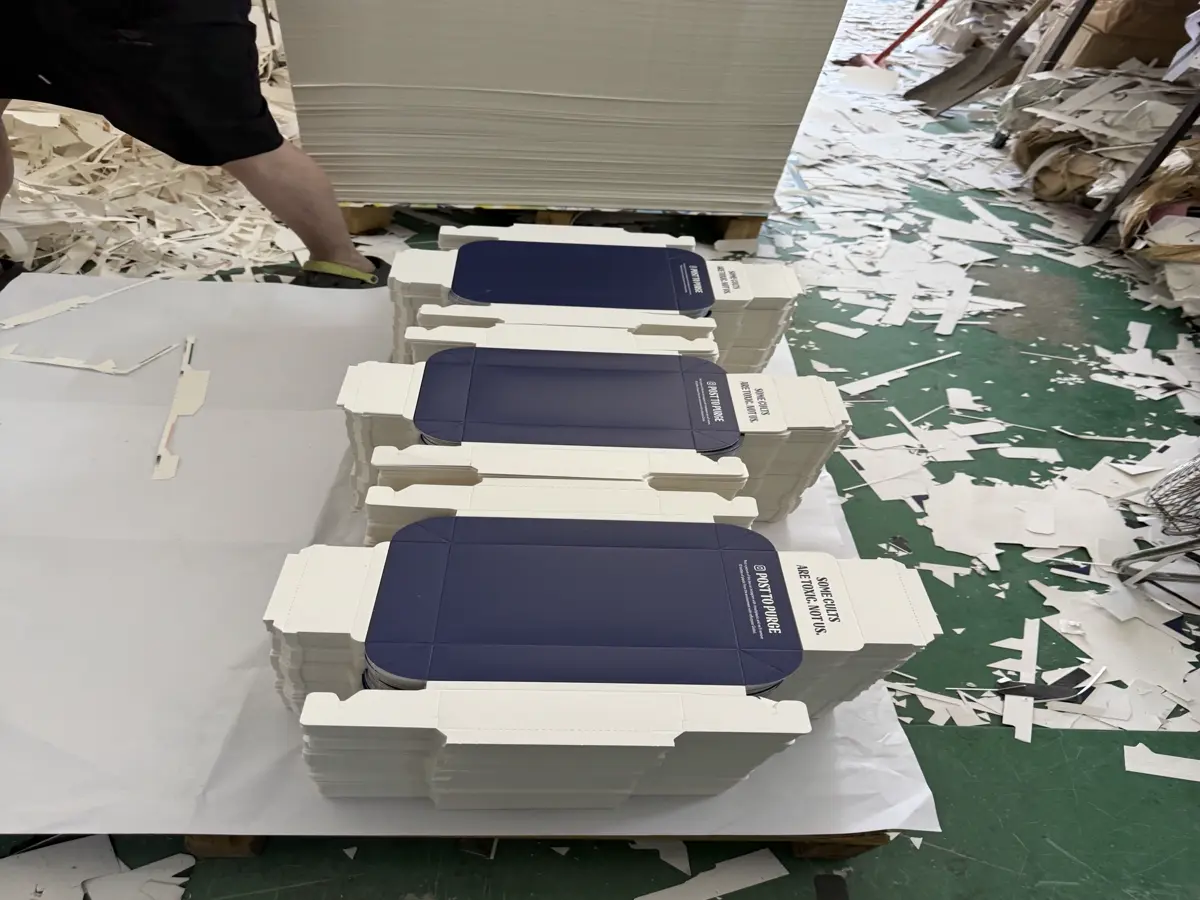
In one laundry detergent sheet project, several suppliers appeared to be quoting the same product: a retail box marketed as providing 100 laundry loads.
At first, the prices seemed easy to compare. Once the specifications were reviewed, however, the products were not actually the same.
One supplier counted half of a perforated sheet as one load. Another supplier used a smaller sheet size. Some quotations were based on a basic formula, while others included additional enzymes or different surfactant systems.
There were also differences in:
- The number and dimensions of the sheets.
- Sheet thickness and weight.
- Fragrance options.
- Formula composition.
- Retail box size and construction.
- Whether custom packaging was included.
- MOQ for each fragrance.
- Master-carton quantity.
- Production and delivery terms.
A buyer comparing only the advertised load count and unit price could easily choose an option that looked cheaper but contained less product or excluded important packaging costs.
We reorganized the quotations around the same sheet dimensions, formula requirements, number of sheets, packaging structure, MOQ, and delivery terms. Only after those details were aligned could the buyer see which supplier offered the most suitable overall option.
This type of difference is common. Product names are often marketing descriptions, not complete manufacturing specifications.
Evaluate relevant production experience
A factory may produce items in the same general category without having experience with the buyer's specific construction or customization.
For example, a factory that produces standard fabric bags may not have experience with waterproof seams, reinforced handles, unusual zippers, or retail packaging. A factory producing household cleaners may not understand the documentation or labeling requirements for the buyer's target country.
Ask suppliers for evidence of relevant experience:
- Have they produced a similar material or construction?
- Can they provide photos or videos from similar production?
- Which parts are manufactured internally?
- Which processes are subcontracted?
- Do they have the required equipment?
- Who develops the sample?
- Who purchases the raw materials?
- How do they control differences between the sample and mass production?
The purpose is not to demand confidential customer information. It is to understand whether the supplier's experience is genuinely relevant to the proposed order.
Use samples to test more than the product
A sample should be evaluated for quality, but it also reveals how the supplier manages a project.
Pay attention to whether the supplier:
- Confirms the specifications before making the sample.
- Uses the requested materials and dimensions.
- Explains any necessary changes before proceeding.
- Meets the promised sample timeline.
- Labels and packs the sample correctly.
- Responds clearly to revision requests.
- Records the final approved details.
A good sample is important, but the approved sample should also be supported by written specifications, photographs, measurements, material details, artwork files, and any agreed tolerances. Without that documentation, the factory and buyer may remember the sample differently when mass production begins.
Review documentation carefully
Certificates and test reports should not be accepted based only on a logo or screenshot.
Buyers should check:
- The company name on the document.
- The manufacturer and factory address.
- The product or material covered.
- The test standard.
- The report date and validity period.
- Whether the report applies to the quoted product.
- Whether the document comes from the factory or another supplier.
A supplier may hold a legitimate certificate that does not cover the product being purchased. A report for one material, formulation, or model should not automatically be assumed to cover another.
For regulated or higher-risk products, the buyer may need new testing based on the final production formula, material, packaging, or target market.
Compare communication quality
Communication is part of supplier performance.
Slow English is not necessarily a warning sign, and perfect English does not guarantee manufacturing ability. What matters is whether the supplier understands questions and provides complete, consistent answers.
Look for suppliers that:
- Confirm details instead of making silent assumptions.
- Identify technical limitations early.
- Explain price differences.
- Answer every part of a question.
- Keep specifications consistent across messages.
- Admit when something needs to be checked with production.
- Provide realistic timelines.
- Document agreed changes.
Be cautious when every request is immediately described as "no problem," especially before the supplier has reviewed the dimensions, materials, packaging, MOQ, and timeline. A reliable supplier will sometimes explain that a request requires a different process, higher MOQ, longer lead time, or additional cost.
How to use platform protections wisely
Alibaba's Trade Assurance can add payment and order protection when the order terms are written clearly and payment stays on platform. It should not be treated as a substitute for correct specifications, sample approval, or inspection.
Use protection tools for what they are good at: documenting the order, payment route, shipment date, and dispute process. The basis of protection is usually the written order terms, so vague specifications create weak protection.
Before paying a deposit, confirm:
- The legal or platform entity receiving payment.
- The product specification attached to the order.
- Packaging, carton marks, and shipping date.
- Whether inspection is allowed before shipment.
- The refund or dispute process if goods do not match the agreed terms.
For larger or higher-risk orders, buyers may still need independent inspection, product testing, or legal/compliance advice outside the platform.
How to use external platforms without outsourcing judgment
External sourcing platforms are useful when they are used for specific jobs:
- Use Alibaba to build a long list, read company profiles, request comparable quotes, and review Verified Supplier or Trade Assurance details.
- Use Global Sources or Made-in-China.com to see whether the same category has different supplier pools, pricing language, or factory types.
- Use the Canton Fair exhibitor and product tools before or after a trade show to compare suppliers you can meet or have already met.
- Use third-party audit reports, product test reports, and certificates as evidence to review, not badges to accept automatically.
The buyer's work is to connect all of that information back to the order: the material, quantity, packaging, destination, timeline, inspection standard, and payment risk.
Questions to ask suppliers or partners
- Have you manufactured this material and construction before?
- Which production steps are completed in your own facility?
- Which parts are purchased from outside suppliers?
- What is included in the quoted price, and what is excluded?
- What could cause the final price to change?
- What is the MOQ for the product, packaging, color, and logo?
- How will the approved sample be documented?
- What quality checks are completed during production?
- Can you share the full inspection report, certificate, or test report rather than a cropped screenshot?
- Which company name will appear on the invoice, payment account, and export documents?
- Can an independent inspection be arranged before shipment?
- What are the carton dimensions, weights, and packing quantities?
- Which Incoterm is being quoted?
- Who will be responsible for the project after the order is placed?
Specific questions make it easier to compare the quality of the answers, not just the prices. Notice which suppliers ask you questions back. A factory that wants your packaging specs and tolerance requirements before quoting is telling you how it works.
How Funda compares suppliers
Funda Sourcing does not simply collect several quotations and forward them to the buyer.
We first organize the product requirements so shortlisted suppliers are responding to the same request. We then compare the quotations using the same categories, including:
- Specifications and materials.
- Product and packaging MOQ.
- Tooling and setup costs.
- Customization options.
- Sample requirements.
- Production lead time.
- Quality-control procedures.
- Testing and documentation.
- Carton information.
- Shipping and delivery terms.
Unanswered questions and supplier assumptions are recorded separately rather than hidden inside email conversations. When samples are required, we compare them against the same criteria and document revisions before the buyer approves production.
This process does not guarantee that every problem will disappear. It gives the buyer a clearer basis for deciding which supplier is suitable and which risks still need to be managed.
For the full sequence from shortlist to shipment, see how the sourcing process works.
Useful next reads include how to review factory quotes, how to background check a Chinese supplier, and how to build a better sourcing brief.
How many suppliers should you compare?
For many standard products, three to five qualified quotations can provide a useful initial comparison.
It is not always necessary to request samples from every supplier. Buyers can first eliminate suppliers that:
- Cannot meet the required specifications.
- Have an unsuitable MOQ.
- Exclude important costs.
- Lack relevant experience.
- Cannot provide required documentation.
- Give unclear or inconsistent answers.
- Cannot meet the project timeline.
The strongest two or three candidates can then move to the sampling stage when the cost and development timeline make sense.
For products requiring expensive molds, tooling, engineering, or regulatory testing, the shortlist may need to be narrowed further before sample development begins.
Frequently Asked Questions
Funda take
Alibaba can help buyers discover suppliers and gather initial information. Its verification tools can also provide valuable evidence about a company's general operations.
The final supplier decision, however, should be based on the specific project.
Do not compare supplier profiles. Compare specifications, samples, documentation, production readiness, communication, and the complete cost of getting the product delivered.
Use the platforms to build the long list. Build the short list on evidence that a listing page alone cannot prove.
Tired of comparing supplier listings on your own?
Send Funda your product and shortlist. We help verify who is behind the listings, compare real capabilities, and coordinate samples from the strongest candidates.

