
Sourcing human hair wigs from China can look easy at first. Supplier listings are full of polished photos and familiar phrases such as virgin hair, Remy hair, HD lace, transparent lace, glueless cap, pre-plucked hairline, and factory price. The difficult part begins when the buyer needs the approved quality to stay consistent across samples, bulk production, packaging, and repeat orders.
For importers, beauty brands, salon distributors, and e-commerce sellers, the goal is not simply to find a wig supplier. The goal is to define the product clearly enough that several suppliers can quote the same standard, then verify that the chosen supplier can reproduce it.
Quick answer
To source human hair wigs from China, define the hair type, cap construction, lace type, density, length, color, texture, packaging, order quantity, and destination market before requesting quotes. Compare suppliers through matching samples, hair-quality checks, cap-construction review, repeatable shedding and tangling tests, packaging approval, and pre-shipment inspection.
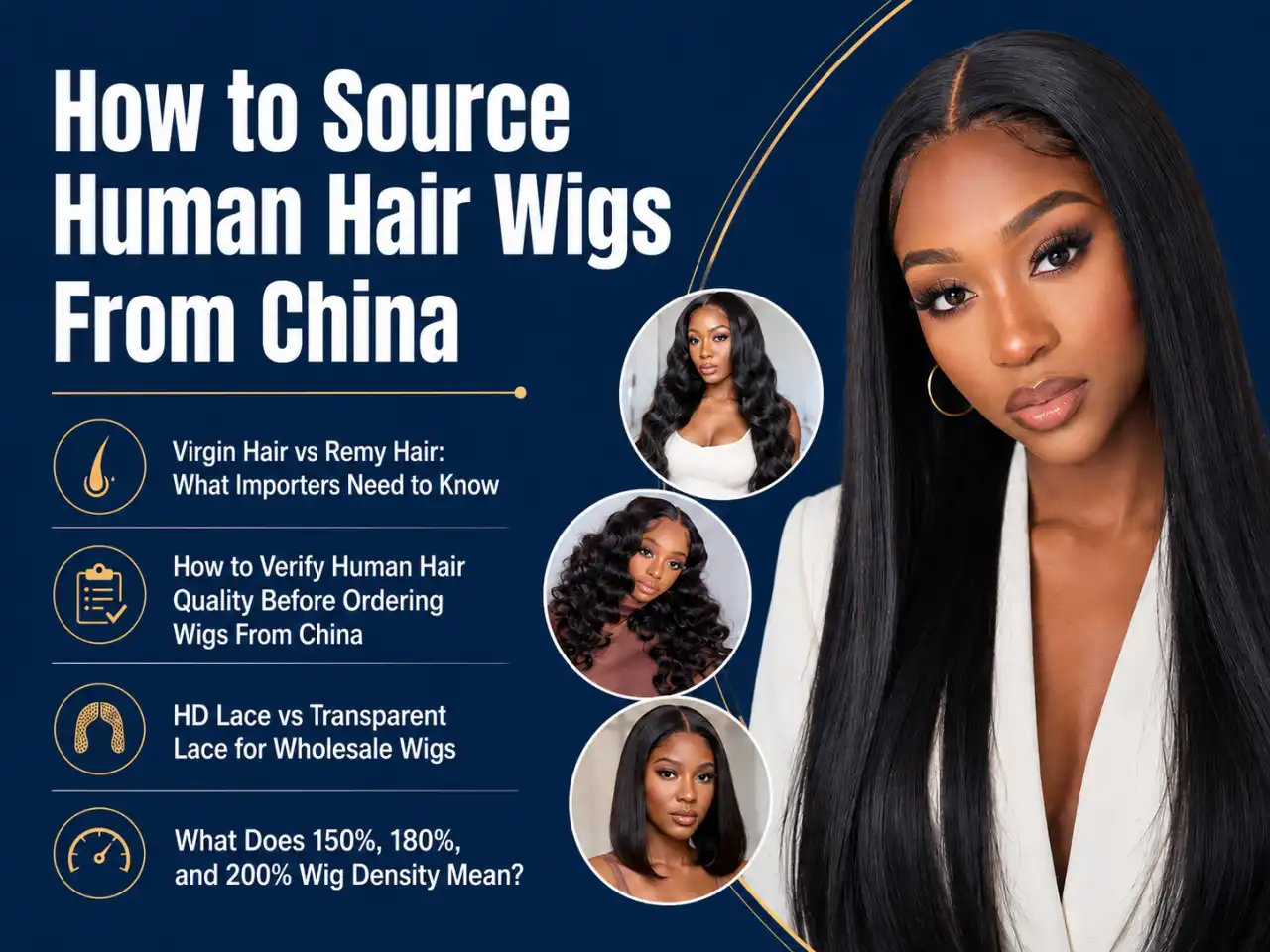
Why human hair wigs are harder to source than they look
A finished wig combines several variables: the hair material, processing, lace, cap structure, knots, ventilation work, hairline finishing, dyeing, texture setting, packaging, and shipping protection.
Two suppliers may both quote a 13x4 body-wave human hair lace front wig at 180% density. One may use better aligned hair, finer lace, stronger knots, and fuller ends. Another may use mixed hair quality, heavier processing, thin ends, and a cap that only looks similar in product photos. Both quotes can be technically correct if the buyer has not defined the missing details.
That is why the lowest unit price is not a useful benchmark until the specification is clear. If the brief is vague, each supplier is filling in the product differently.
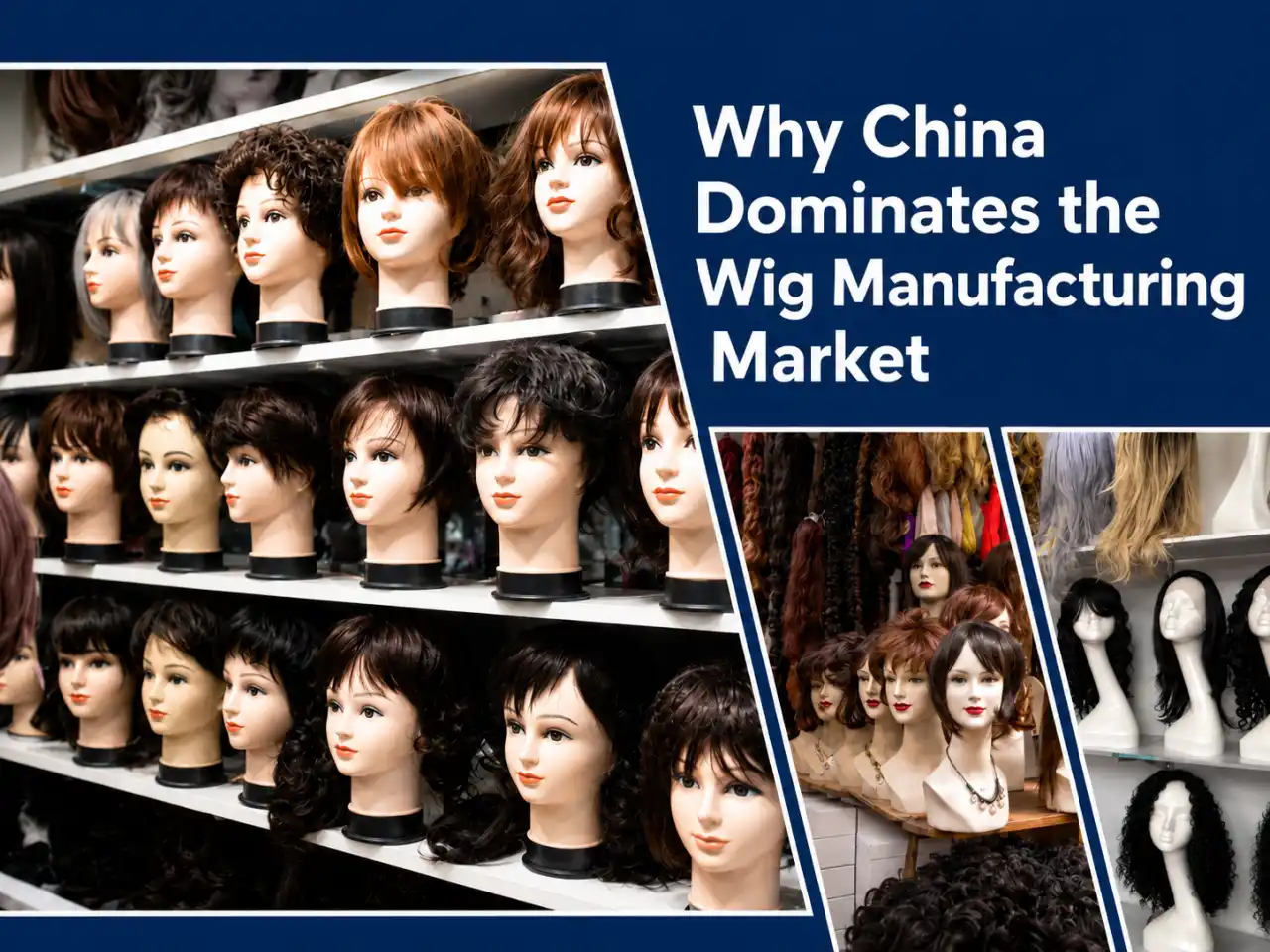
Virgin Hair vs Remy Hair: What Importers Need to Know
Virgin hair usually means human hair that has not been chemically processed, dyed, bleached, permed, or relaxed before manufacturing. Suppliers do not always use the term consistently. If a product is bleach blonde, ombre, or a heavily processed curl pattern, the buyer should ask exactly what treatment the hair has received.
Remy hair refers to hair with the cuticles kept aligned in the same direction. Good alignment can help reduce tangling and matting because the outer layer of the hair is not working against itself. Remy hair may still be dyed, steamed, or otherwise processed for the final wig.
For wholesale buyers, the practical questions are more useful than the label alone:
- Has the hair been chemically processed, acid-treated, or coated with silicone?
- Are the cuticles aligned, and is the hair single-donor or mixed-donor?
- Are the ends full enough for the advertised length?
- What washing, combing, shedding, and heat-styling checks support the claim?
- Can the supplier repeat the same hair standard in bulk and on the next order?
Be careful with 10A, 12A, and 14A labels. These are not universal grades with one shared industry definition. One supplier's 12A may be another supplier's standard Remy hair. Ask for a written description of the hair, processing, length distribution, and test method instead of comparing grade numbers as if they were a certification.
Names such as Brazilian, Peruvian, Malaysian, Indian, and Vietnamese can also be used as marketing categories for texture, color, or customer preference. They may not prove the geographic origin of the hair. If origin matters to your brand, request supporting documentation and avoid printing an origin claim on your packaging unless you can substantiate it for the specific product.
HD Lace vs Transparent Lace for Wholesale Wigs
Lace choice affects appearance, comfort, durability, and price.
HD lace is usually finer and thinner, which can make the hairline look more natural in close-up photos and premium styling. The tradeoff is durability. Fine lace can tear more easily during production, installation, or repeated use when the construction or handling is poor.
Transparent lace is usually a little stronger and more forgiving. It can be a practical standard option for everyday wholesale wigs, salon inventory, and e-commerce products where the buyer needs a balance between appearance, durability, and cost. It may still need tinting or makeup adjustment for a particular customer.
Do not choose lace from the name alone. Ask for a sample wig or lace swatch and check it under natural light and flash photography. Review:
- Lace color against the target customer base.
- Lace thickness, softness, and stretch.
- Knot size and bleaching quality.
- Hairline density and plucking.
- Tear resistance around the frontal or closure area.
- Lace visibility after installation.
For a private-label range, transparent lace can be the standard line while HD lace is positioned as a premium option. That creates a clear product difference without making every customer pay for the most delicate construction.
What Does 150%, 180%, and 200% Wig Density Mean?
Wig density describes how full the hair appears on the cap. Higher density generally means more hair is ventilated or sewn into the wig, but the percentage is not a universal gram measurement. A supplier should define what the percentage means for its own construction and confirm the finished product weight.
150% density is often a natural, lighter everyday look. It can suit customers who want easier styling and more comfortable wear.
180% density is a common fuller option for lace front and closure wigs. It adds volume without always becoming too heavy, depending on hair length and cap construction.
200% density is fuller and more dramatic. It can suit long lengths, glamour styling, and customers who want high volume. It also costs more, weighs more, and may feel less breathable.
Density should be reviewed with length, texture, and end fullness. A 200% 30-inch wig with thin ends may look weaker than an 180% wig with better hair distribution. Also ask whether the hair is single drawn or double drawn. Single-drawn hair has more variation in strand length and may taper toward the ends. Double-drawn hair is sorted so the ends look fuller and more even, which usually increases labor and cost.
For acceptance, do not approve density from a front-facing photo. Ask the supplier to state the finished wig weight, the measurement tolerance, and the approved construction. Weigh the sample and compare production units against that record.
How to Measure Wig Length Before Ordering
Curly and wavy hair can look shorter than its actual length, so length needs a consistent measurement method. Agree on the method before samples are made.
For a practical check, lay the hair flat and measure along the strand from the agreed starting point near the crown or cap to the longest end. For curly or wavy styles, gently stretch the hair straight before measuring. Do not pull it hard enough to change the strand or distort the wig.
Write the following into the specification and purchase order:
- Nominal length, such as 20 inches.
- Whether the measurement is stretched or unstretched.
- Starting point and longest-point method.
- Tolerance, such as the range the buyer will accept.
- Whether the tolerance applies to every unit or to a sample average.
There is no single tolerance that works for every length, texture, or factory. The important point is to agree on one in writing. Measure the same way during sample approval and pre-shipment inspection so a length dispute is based on the same record.
Build a clear wig sourcing specification
A supplier cannot quote accurately from a reference photo alone. Before requesting wholesale pricing, prepare one specification sheet and send the same version to every supplier.
Include:
- Wig type: lace front, full lace, closure wig, headband wig, U-part wig, glueless wig, or machine-made wig.
- Lace size: 13x4, 13x6, 5x5, 6x6, 360 lace, or another construction.
- Hair claim: Remy, virgin, raw, single-donor, processed color, or blended grade.
- Texture: straight, body wave, deep wave, loose wave, water wave, kinky curly, or kinky straight.
- Length, measurement method, and tolerance.
- Density and finished weight requirement.
- Color: natural black, #1B, #2, #4, 613, ombre, highlight, or custom dye.
- Cap size, adjustable band, combs, elastic band, and cap material.
- Hairline: pre-plucked, baby hair, bleached knots, single knots, double knots, or mixed knotting.
- Unit packaging, care card, hangtag, barcode, SKU label, and export carton marks.
- Quantity by SKU, destination country, delivery address, and target ship date.
A useful RFQ might say: 20-inch body-wave wig, natural black, 180% density, Remy human hair, 13x4 HD lace, medium cap, pre-plucked hairline, bleached knots, adjustable elastic band, and custom branded box. That gives suppliers a product to quote rather than an image to interpret.
For more detail, use Funda's sourcing brief guide before contacting factories.
How to verify human hair quality before ordering
Sample review should be more than checking whether the wig looks good when it arrives. Give each supplier the same target specification so the comparison is fair.
Start with a visual check of hair fullness from root to end, lace appearance, knot work, parting area, cap stitching, track spacing, smell, color consistency, and whether the hair length matches the written method.
Then use a repeatable test:
1. Use the same comb and the same number of gentle strokes for each sample. 2. Comb from ends toward the roots and record visible shedding, snags, and tangling. 3. Wash one sample using the same water temperature, shampoo, conditioner, drying method, and styling routine. 4. Repeat the comb and appearance check after the first wash. 5. Check again after 3 to 5 washes if the wig is intended for repeat wear or a premium price point.
Record the result with photos and short videos. The test does not need to imitate every customer's routine. It needs to be consistent enough that Supplier A and Supplier B are being judged against the same process.
Also review cap fit, comb placement, elastic tension, lace damage, hairline finish, and whether the texture returns after washing. Keep the approved sample as the golden sample. Bulk production should be checked against that sample, not only against a supplier invoice description.
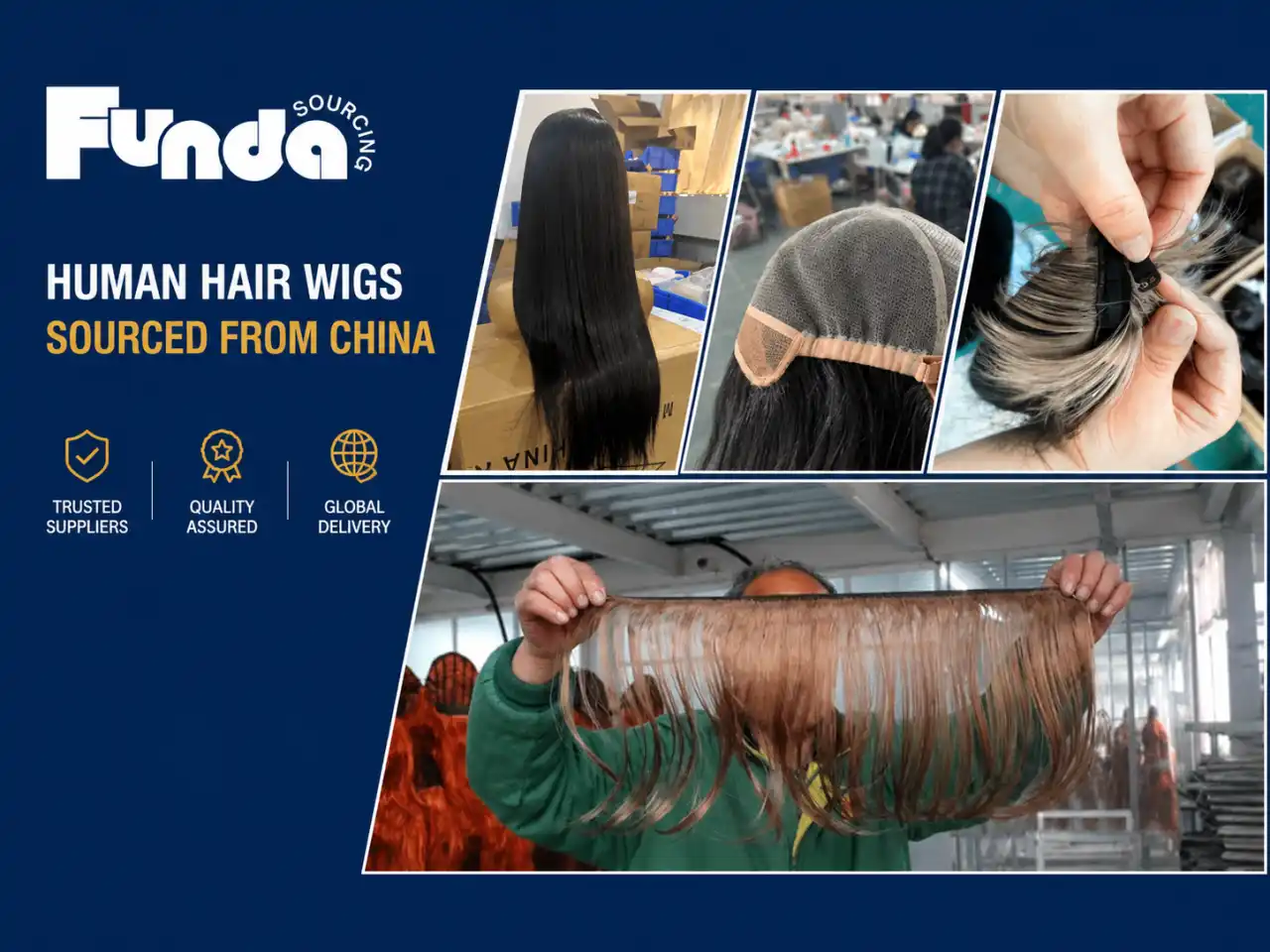
Supplier checks before placing a wholesale order
Human hair wig suppliers in China may be factories, trading companies, small workshops, salon-product wholesalers, or e-commerce sellers. Any of these can be useful in the right situation, but the buyer should know which one they are dealing with.
Before placing an order, review:
- Business registration and registered business scope.
- Product category experience and export markets.
- Factory, workshop, or production-partner information.
- Sample room and bulk-production capacity.
- Whether ventilating, dyeing, bleaching, and packaging are in-house or outsourced.
- MOQ by style, color, length, density, and packaging.
- Sample and bulk lead times, especially around peak seasons.
- Replacement policy for quality problems.
- Payment terms and inspection timing.
A supplier that explains its limits clearly is usually easier to manage than one that promises every option at the lowest price. Funda's guide to comparing suppliers beyond Alibaba covers additional checks for factory fit and communication quality.
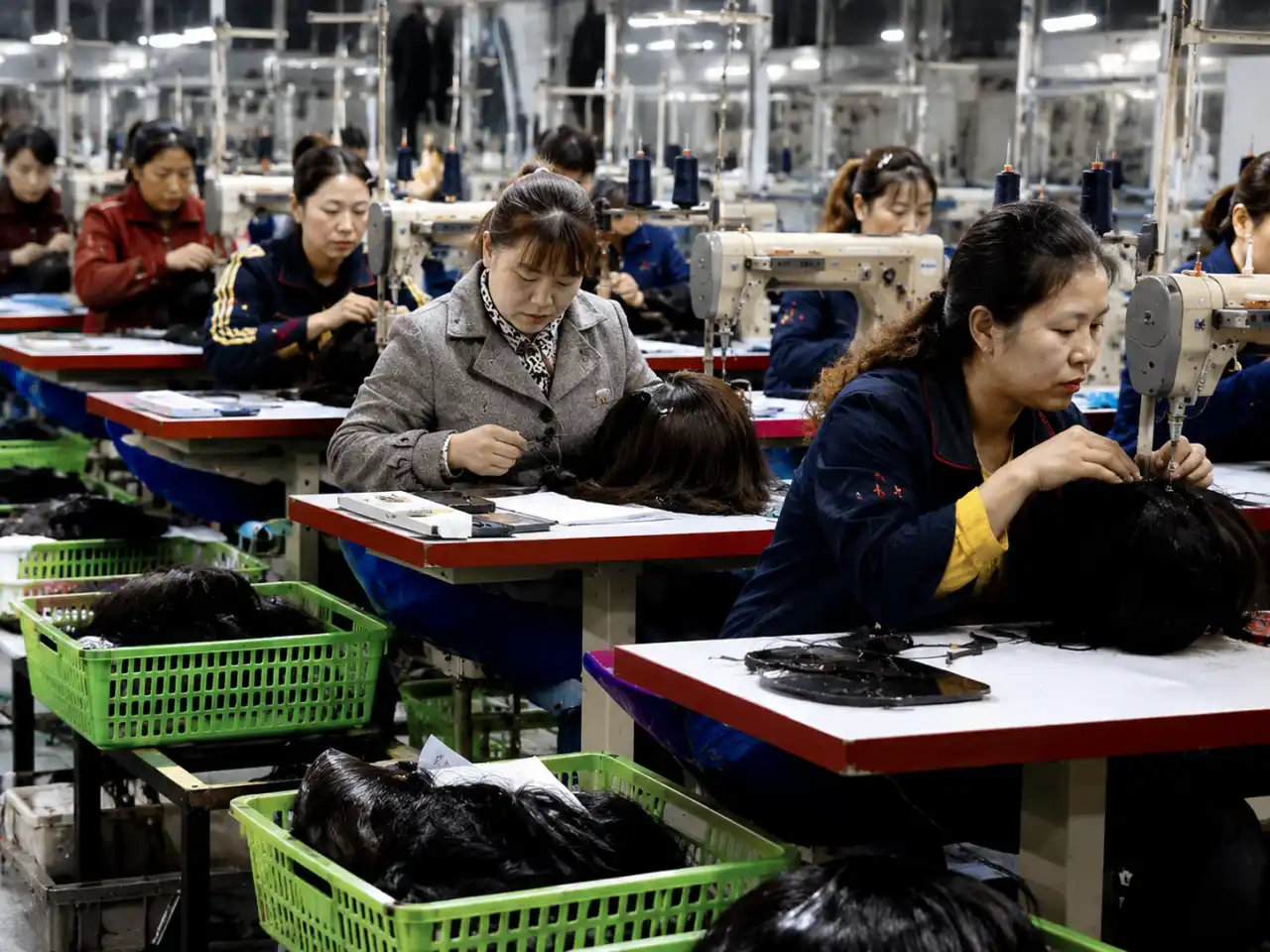
Compare landed cost, not only unit price
The lowest wig price is not always the lowest-cost sourcing option. Compare the complete cost to the buyer's warehouse:
Landed cost = product cost + packaging + inspection + China transportation + international freight + duties + customs clearance + final delivery.
Ask every supplier or logistics partner to state what is included and what is excluded. Clarify the trade term, pickup location, carton count, carton dimensions, gross weight, destination address, duty handling, and delivery timeline. EXW, FOB, DAP, and DDP can place very different responsibilities on the buyer.
When comparing quotes, keep the product specification identical. A lower quote may use a different lace, lower finished weight, shorter usable length, simpler packaging, or a different delivery assumption.
Packaging MOQ is not the same as wig MOQ
Packaging often creates a separate minimum order. A supplier may accept a small wig order but require a larger quantity for custom boxes, printed satin bags, inserts, labels, or barcode stickers. Ask for the MOQ for the wig and the MOQ for every customized packaging component.
Box dimensions also affect shipping cost. A slightly larger box can increase volumetric weight even when the wig itself is light. Request a packaging sample or flat dimensions before finalizing freight assumptions.
Before approving artwork for print, check:
- Brand name, logo, website, and contact details.
- Product name, SKU, color, length, and density.
- Material or hair claims that can be supported.
- Country-of-origin wording and any required market labels.
- Barcode size, position, and scannability.
- Care instructions, warnings, and insert language.
- Inner quantity, carton quantity, carton marks, and shipping labels.
Funda's private-label packaging service can help coordinate these details with the product specification.
Quality control before shipment
Pre-shipment inspection should happen before the balance payment is released. For wig orders, the checklist should cover both product and packaging.
| Inspection item | What to check | Acceptance record |
|---|---|---|
| Length | Stretched measurement and agreed tolerance | Measured result by sampled SKU |
| Finished weight | Weight of the completed wig, including the agreed measurement basis | Gram result and tolerance |
| Density | Fullness and distribution against the approved sample | Front, side, and back photos |
| Color and texture | Match to the approved sample under consistent light | Sample comparison photos |
| Lace | Type, color, size, thickness, and visible damage | Lace detail photos |
| Cap | Circumference, straps, combs, stitching, and fit | Measurement and construction check |
| Hairline | Plucking, baby hair, parting, and overall finish | Close-up photos |
| Knots | Bleaching quality, knot size, and loose strands | Close-up photos |
| Shedding | Same comb and stroke-count method as sample approval | Recorded test result |
| Tangling | Combing and wash performance | Before-and-after notes |
| Odor | Unusual chemical or storage smell | Inspection note |
| Packaging | Print, barcode, SKU, quantity, and carton marks | Packaging and carton photos |
If the order is large or the product is new, consider an inline check before all units are packed. Finding lace, cap, or density issues after the shipment is sealed is expensive and slow. Funda's quality control service can support inspection planning before goods leave the supplier.
Common mistakes when sourcing human hair wigs
- Choosing a supplier only because the unit price is the lowest.
- Treating 10A, 12A, or 14A as universal quality standards.
- Approving hair quality from photos or videos without receiving a sample.
- Comparing samples with different lace sizes, lengths, densities, or cap constructions.
- Skipping the wash test because the hair looks good when dry.
- Forgetting to record finished wig weight.
- Approving color only from a phone or laptop screen.
- Assuming packaging MOQ is the same as product MOQ.
- Shipping without a final inspection.
- Assuming mass production will match the first sample without a golden sample and written acceptance criteria.
How Funda Sourcing supports wig sourcing
Funda Sourcing helps overseas buyers turn a broad product idea into a controlled sourcing process. For human hair wigs, that can include supplier search, quote comparison, sample coordination, hair and cap specification review, packaging planning, quality-control checklist development, inspection coordination, and logistics support.
For related planning, review how to compare suppliers beyond Alibaba, quality check planning before production, and how to review factory quotes.
Frequently Asked Questions
Funda take
Human hair wig sourcing is a details business. The difference between a strong supplier and a disappointing order often sits in the small things: lace thickness, knot work, density distribution, end fullness, smell after washing, packaging labels, and whether bulk production matches the approved sample.
Start with one clear specification, compare suppliers on evidence rather than photos, test the hair more than once, and inspect before shipment. That is the difference between buying wigs and building a repeatable sourcing program.
Sourcing wigs or beauty products from China?
Send Funda your target wig type, quantity, market, packaging needs, and quality standard. We can help compare suppliers, coordinate samples, plan inspection, and organize shipping.

