
By the time finished goods are stacked in cartons, quality is history — inspection can only tell you how bad it is. Planning QC before production starts is what turns inspection from a verdict into a control.
Quick answer
Before production starts, buyers should define the approved sample, product specifications, defect criteria, packaging requirements, carton marks, inspection timing, and what evidence is needed before balance payment or shipment release.
Why this matters for buyers
A QC plan agreed before the deposit changes factory behavior during production, not after it. Workers hold tolerances differently when they know which ones will be measured; managers schedule differently when a mid-production check is on the calendar.
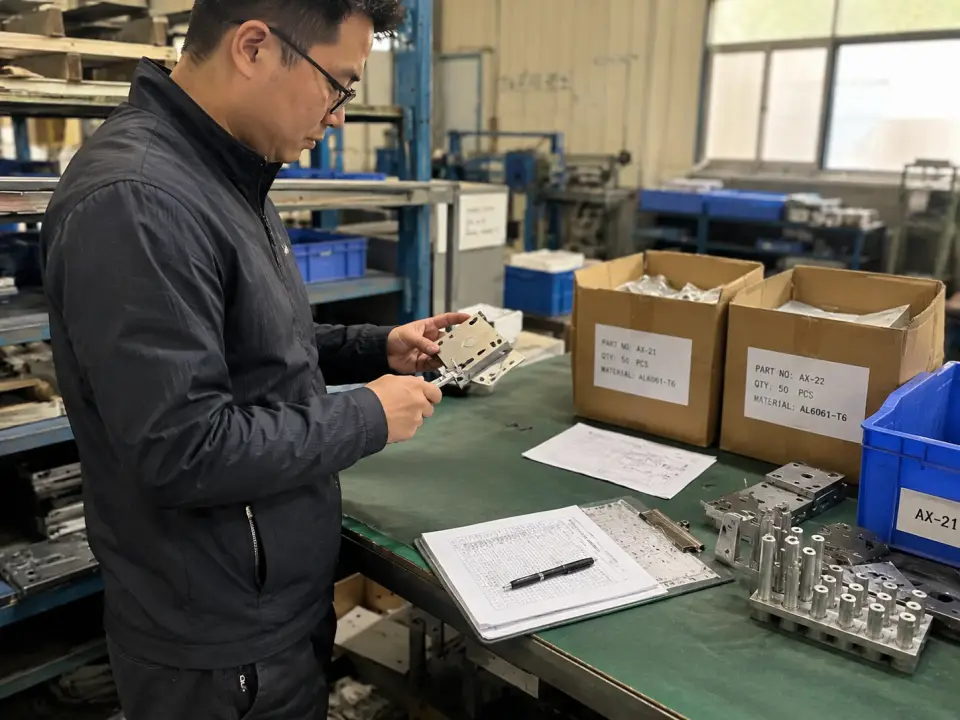
QC details to define before production
The plan does not need to be elaborate — it needs to be explicit and agreed before production begins.
Define with the supplier in advance:
- Approved sample or golden sample reference and where it will be kept.
- Product specs covering material, size, weight, color, function, finish, and tolerances.
- Defect categories such as critical, major, and minor without getting lost in technical language.
- Packaging checks for unit box, inserts, labels, barcode scan, carton marks, and protection.
- Inspection timing, order quantity, packed percentage, and who receives the report.
- Decision rules for rework, replacement, shipment hold, or buyer review.

What goes wrong when QC is planned late
Buyers often approve a sample but do not turn it into inspection criteria. Factories may not know which defects matter most to the buyer's customer or sales channel.
Packaging and carton marks are skipped even though they affect receiving and customer experience. Inspection is scheduled too late, after the factory expects immediate balance payment and shipment.
A practical inspection planning example
A buyer ordering retail-ready storage boxes should not only inspect whether the product is present. The checklist should include box print, barcode scan, insert count, carton marks, product fit, surface defects, and whether the packaging protects the item through transit.
Questions to ask suppliers or partners
- What sample or spec will inspection use as the reference?
- Which defects would make the order unacceptable?
- What packaging and label details need checking?
- When will the order be ready for inspection?
- What happens if the inspection finds issues?
How Funda Sourcing supports this step
Funda Sourcing can help buyers organize approved samples, QC expectations, packaging checks, carton details, inspection timing, and supplier communication before production begins. That makes inspection more useful and less reactive.
This kind of planning is the core of Funda's quality control service.
QC planning works best alongside the sample approval checklist, common sample mistakes, and production follow-up after deposit.

Frequently Asked Questions
Funda take
Quality control is not a last-minute gate. It is a set of expectations that should be visible to the buyer, supplier, and inspector before the factory starts making the order.
The cheapest defects are the ones prevented by everyone knowing the standard in advance. Plan the checks early and the final inspection becomes what it should be: confirmation, not discovery.
Planning QC for an upcoming order?
Funda helps buyers define inspection points, coordinate third-party checks, and sequence the balance payment behind verified goods — before production makes it urgent.

