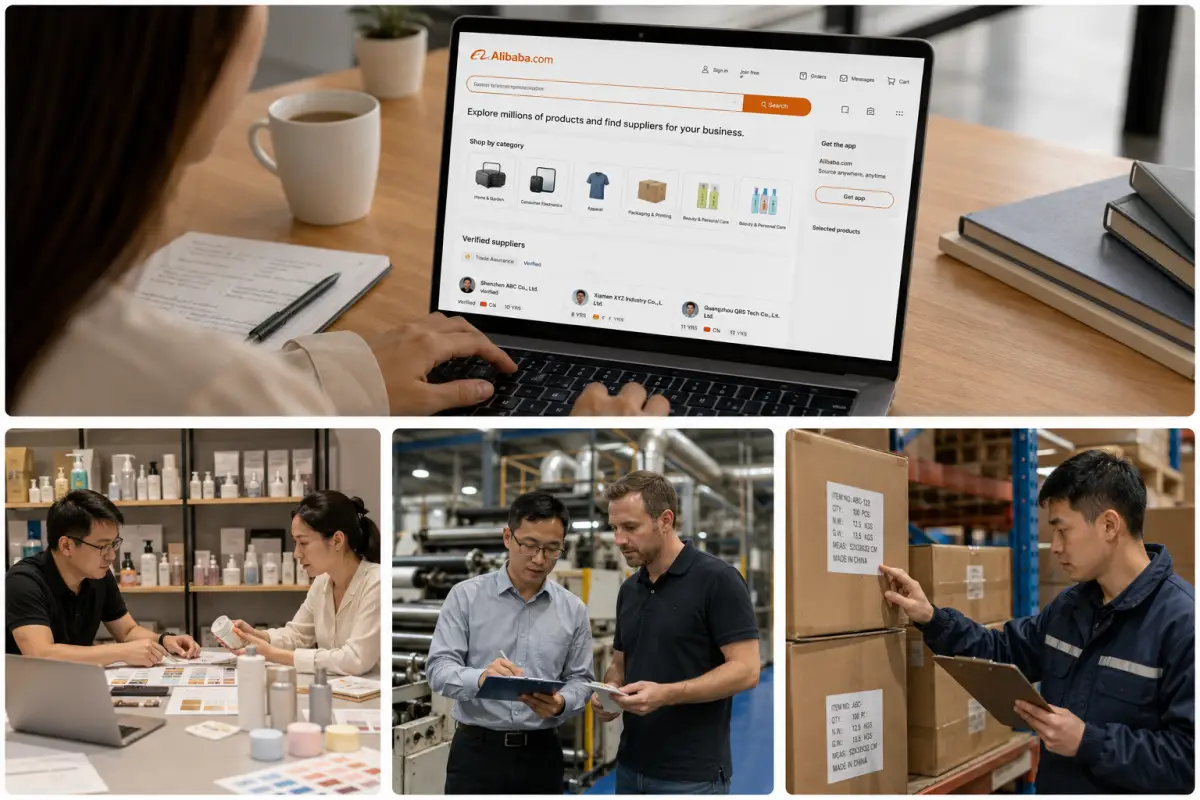
The mindset shift is simple: you are not just shopping for a product. You are building a supply chain. In a market where supplier pages, sales messages, and product photos can look highly professional before anything has been verified, the buyer has to slow the process down enough to check the real business behind the listing. The supplier will affect materials, packaging, quality control, lead time, communication, shipping, and the customer experience that follows.
Quick answer
In 2026, source products on Alibaba by preparing a clear product brief, shortlisting relevant suppliers, sending comparable RFQs, checking supplier fit, ordering samples, documenting every requirement, inspecting before final payment, and confirming shipping and import needs early.
Decide whether Alibaba fits the project
Alibaba works best when a buyer wants wholesale quantities, private label packaging, light customization, or an OEM or ODM project. In 2026, it is especially useful as a discovery tool for comparing supplier options quickly, but it is still usually a poor fit for one-off personal purchases, authentic branded goods outside authorized channels, or orders where the buyer expects an easy domestic return process.
Before searching, define the project clearly:
- Product type, material, dimensions, color, function, and performance needs.
- Whether the item is existing, modified, private label, or fully custom.
- First-order quantity and likely reorder volume.
- Destination country and sales channel.
- Packaging, labeling, barcode, and carton requirements.
- Testing, certification, or compliance concerns.
- Target landed cost and launch timeline.
The clearer the brief, the easier it is to identify suppliers that actually fit.
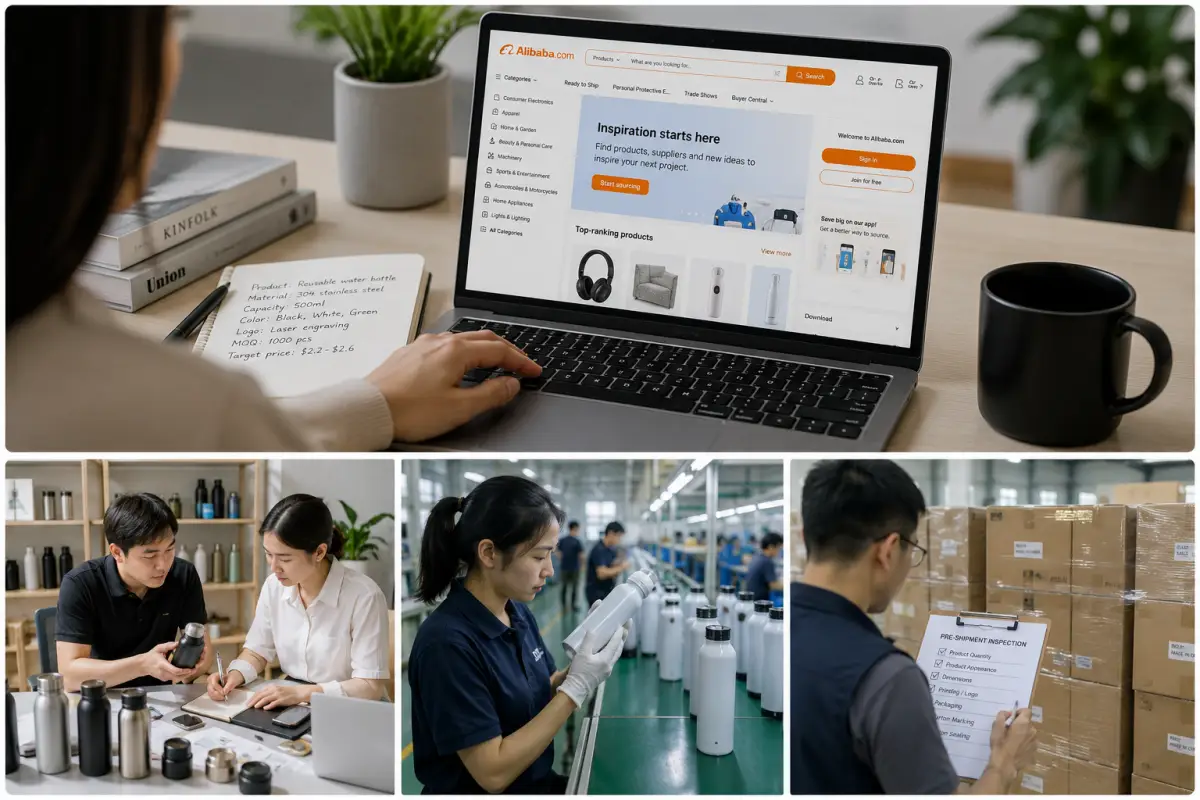
Understand who you are buying from
Buyers on Alibaba usually meet three supplier types: manufacturers, trading companies, and wholesalers. None is automatically good or bad.
A manufacturer may offer stronger technical support and better pricing in its specialty, but may require higher MOQs or less flexibility. A trading company may add a margin, but can sometimes coordinate communication, packaging, lower mixed quantities, or multi-product sourcing better than a single factory. A wholesaler may accept smaller orders, but usually offers less customization.
The better question is not "factory or trading company?" It is: who has the right product experience, documentation, sample quality, communication, commercial terms, and reliability for this order?
Search for suppliers, not just listings
Alibaba listings are introductions, not final offers. Displayed prices are often broad starting ranges, and one supplier may publish many similar product pages. Treat clean images, quick replies, and badge-style signals as starting points for questions, not proof that a supplier is the right fit.
Use several keyword variations. A buyer searching for a "phone case" might also search by material, use case, or manufacturing process. Then compare supplier profiles instead of only product photos. Look for product concentration, relevant category experience, business information, export history, communication quality, and whether the supplier asks intelligent questions.
Do not message 50 suppliers with one sentence. A focused shortlist of five to eight relevant companies usually produces a better comparison.
Send an RFQ that suppliers can quote properly
A clear RFQ makes every supplier quote on the same basis. It also signals that you are a serious buyer.
Include:
- Product name, reference images, and target use.
- Material, size, weight, color, finish, function, and tolerances.
- Estimated order quantity and expected annual volume if known.
- Logo, artwork, labeling, packaging, and carton requirements.
- Required samples, tests, certificates, or reports.
- Target market, shipping destination, deadline, and requested Incoterm.
- Questions about tooling, setup fees, lead time, payment terms, and QC.
Ask suppliers to separate product cost, packaging, tooling, sample fees, testing, inspection, and shipping. One combined number hides too much.
Compare total landed cost, not unit price
The cheapest quote can become expensive once packaging, testing, freight, defects, customs, delays, and rework are included. In 2026, buyers should be especially careful to separate the quoted product cost from packaging, inspection, freight, duties, and final delivery. Compare the full project cost, not only the unit cost.
Your landed cost may include product cost, tooling, packaging setup, samples, sample shipping, testing, inspection, freight, insurance, duties, customs brokerage, port fees, and final delivery.
Also compare quotes under the same trade term and named location. "FOB China" is vague. "FOB Ningbo" is clearer. EXW, FOB, DAP, and DDP can shift major responsibilities between buyer and seller, so do not compare them as if they mean the same thing.
Order samples before approving production
Never approve bulk production from listing photos alone. When practical, order samples from two or three shortlisted suppliers and test them as your customer would use them.
Check material, dimensions, color, odor, finish, durability, packaging, labeling, function, and any product-specific requirement. Then turn the approved sample into a written specification. The supplier should confirm that bulk production must match both the approved sample and the written specs.
Remember that a hand-prepared sample can be better than normal mass production. Ask how the sample was made and whether standard production materials and processes were used.
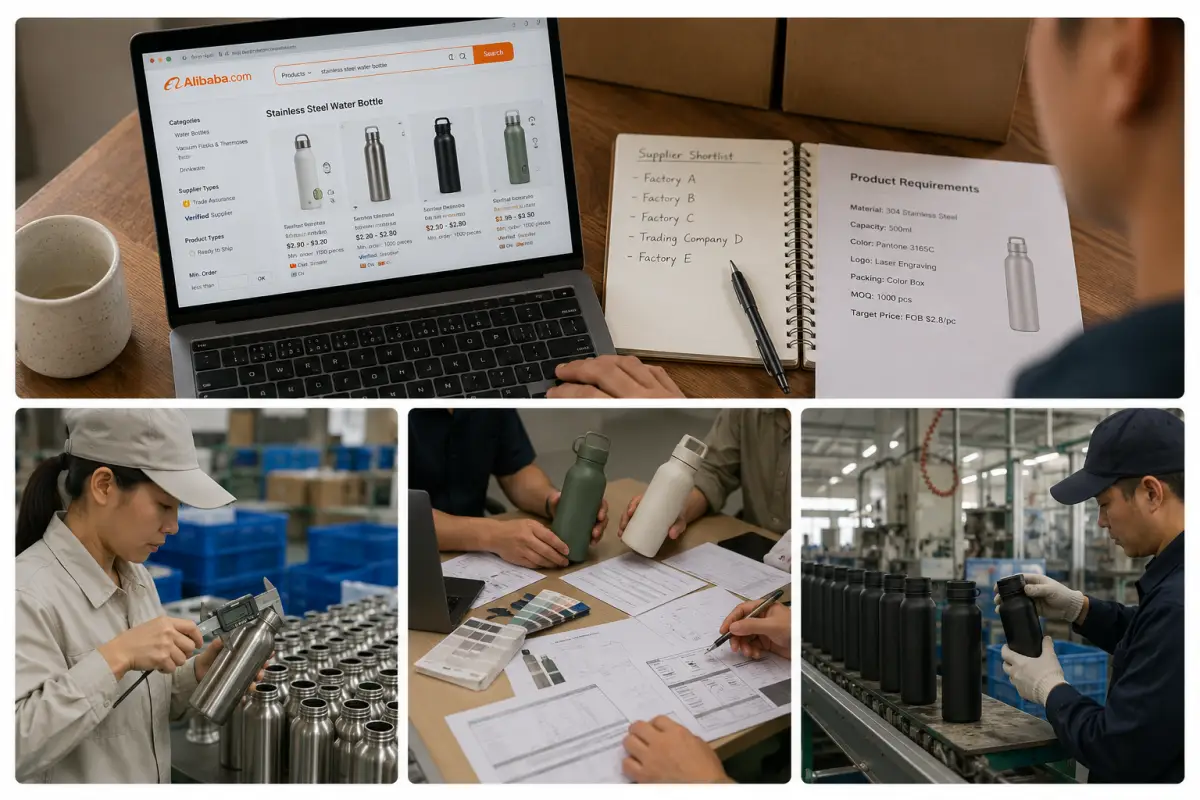
Put critical requirements in writing
Phrases like "high quality" and "same as sample" are not enough. Your purchase order, manufacturing agreement, or platform order should define measurable requirements.
Document the material, dimensions, tolerances, color standard, artwork version, barcode placement, packaging structure, master carton details, order quantity, production deadline, inspection standard, acceptable defect level, payment milestones, and what happens if goods do not conform.
Platform payment protection can help, but it depends heavily on what the buyer and supplier agreed in writing. Clear specs, sample approval, inspection planning, and supplier follow-up still matter.
Inspect before final payment
Quality control should happen before goods leave the supplier. At minimum, ask for production photos, carton marks, packing details, and photos of randomly selected finished units.
For meaningful orders, arrange a pre-shipment inspection before paying the final balance. The checklist should be based on your own product specs and should cover quantity, workmanship, dimensions, color, function, packaging, barcode readability, labeling, carton condition, and any agreed test points.
The goal is to keep enough leverage to correct issues before shipment.
Confirm shipping and import requirements early
Do not wait until production is complete to learn that the product cannot be shipped, labeled, imported, or delivered as planned. Product rules, warehouse requirements, duty exposure, and shipping assumptions can change faster than the supplier's listing copy.
Before placing the order, confirm importer-of-record responsibilities, product classification, duties, tariffs, required test reports, country-of-origin marking, packaging rules, dangerous-goods restrictions, freight method, transit time, and warehouse delivery requirements.
For regulated products or unfamiliar categories, ask a customs broker, freight forwarder, testing lab, or compliance professional to review the plan.
Common Alibaba red flags
One warning sign may have an innocent explanation. Several together should make you slow down.
Be careful when a supplier:
- Quotes far below every competitor without a clear reason.
- Refuses to provide business documents or product certificates.
- Cannot explain materials, production process, or quality checks.
- Pressures you to pay immediately or outside the agreed channel.
- Requests payment to an unrelated personal account.
- Changes bank details without a verifiable explanation.
- Avoids live video, audits, or inspection.
- Says every customization is "no problem" without asking technical questions.
- Will not place important promises in writing.
How Funda Sourcing supports Alibaba projects
Funda Sourcing can help buyers move beyond supplier search by reviewing Alibaba links, preparing RFQs, comparing quotes, coordinating samples, checking packaging details, planning inspections, and connecting production decisions to shipping reality.
Alibaba is a starting point. A structured process is what turns a listing into a supplier relationship that can hold up through production and reorders.
Related reading: compare suppliers beyond Alibaba, review factory quotes, and quality check planning before production.
Frequently Asked Questions
Need help comparing Alibaba suppliers?
Send Funda your product brief, supplier shortlist, or Alibaba links. We can help review fit, compare quotes, coordinate samples, and plan quality checks before the deposit.

