For overseas brands, the advantage is not always the lowest possible unit price. Guangzhou's value is speed and coordination: finding fabric, developing samples, revising fit, checking trims, comparing factories, and arranging export support inside one regional network.
Quick answer
Guangzhou can be a strong apparel sourcing base for brands that need fabric access, sample development, flexible production, wholesale market intelligence, and Pearl River Delta logistics. Buyers still need to verify supplier type, fabric specifications, material minimums, subcontracting, compliance, and quality control before placing production.
Why Guangzhou still matters in 2026
Apparel sourcing in China is changing. Buyers are comparing China with Vietnam, Bangladesh, India, Mexico, and other production regions, while brands are asking factories for smaller runs, faster sampling, better documentation, and clearer compliance support.
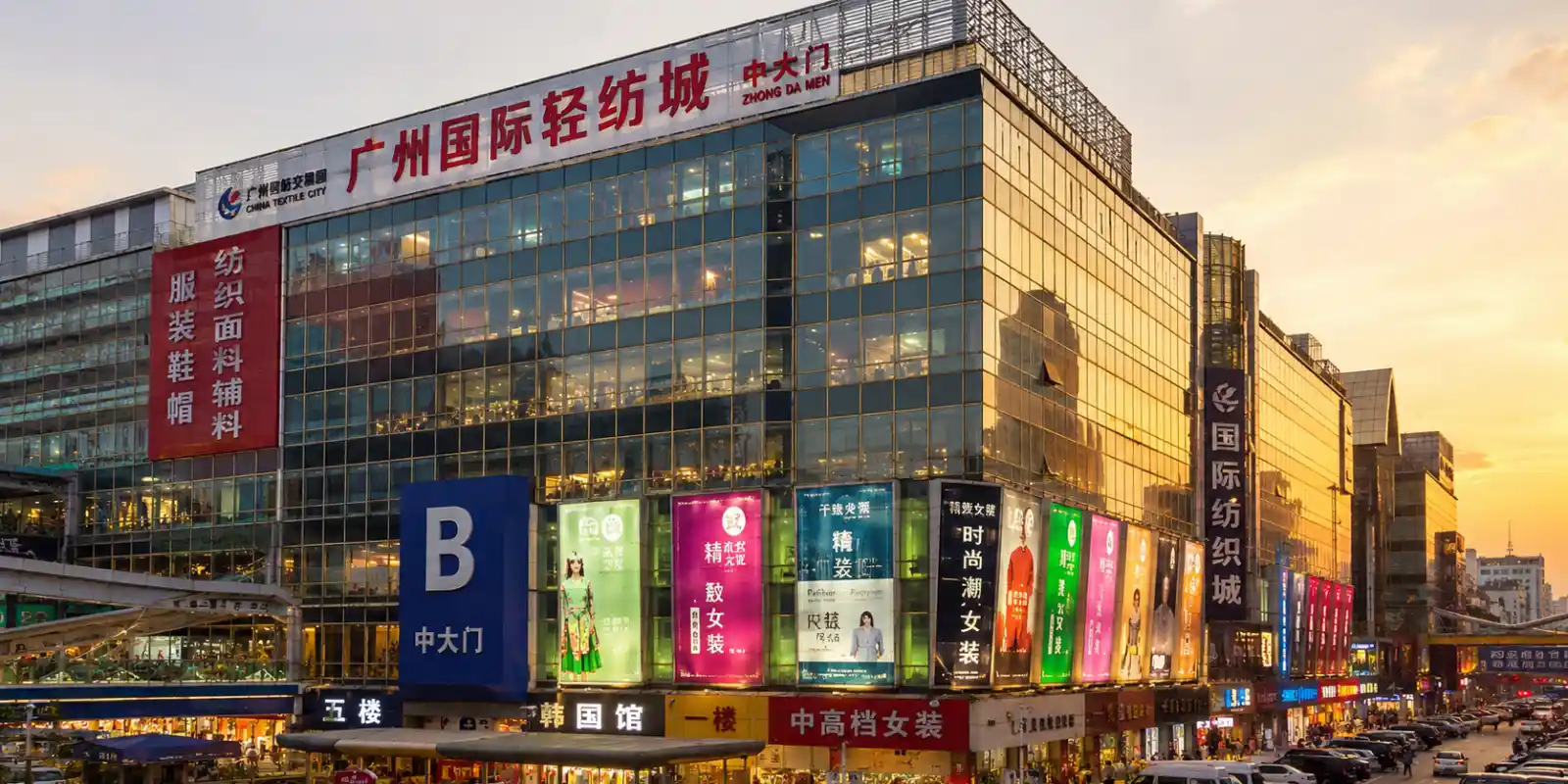
Guangzhou remains relevant because it is not only a sewing location. It combines textile markets, garment factories, trend wholesale districts, e-commerce operators, logistics providers, and export experience. Guangzhou government reporting describes Zhongda's textile business district as a cluster with 61 professional wholesale markets, nearly 16,000 merchants and enterprises, more than two million square meters of commercial space, and annual transaction volume around RMB 200 billion.
That density can shorten development time, but it can also make supplier roles harder to understand. A company calling itself a Guangzhou clothing manufacturer may be a factory, a trading company, a sample studio, a wholesale seller, or a coordinator using several subcontractors.
Main Guangzhou apparel sourcing clusters
Zhongda for fabrics, trims, and development
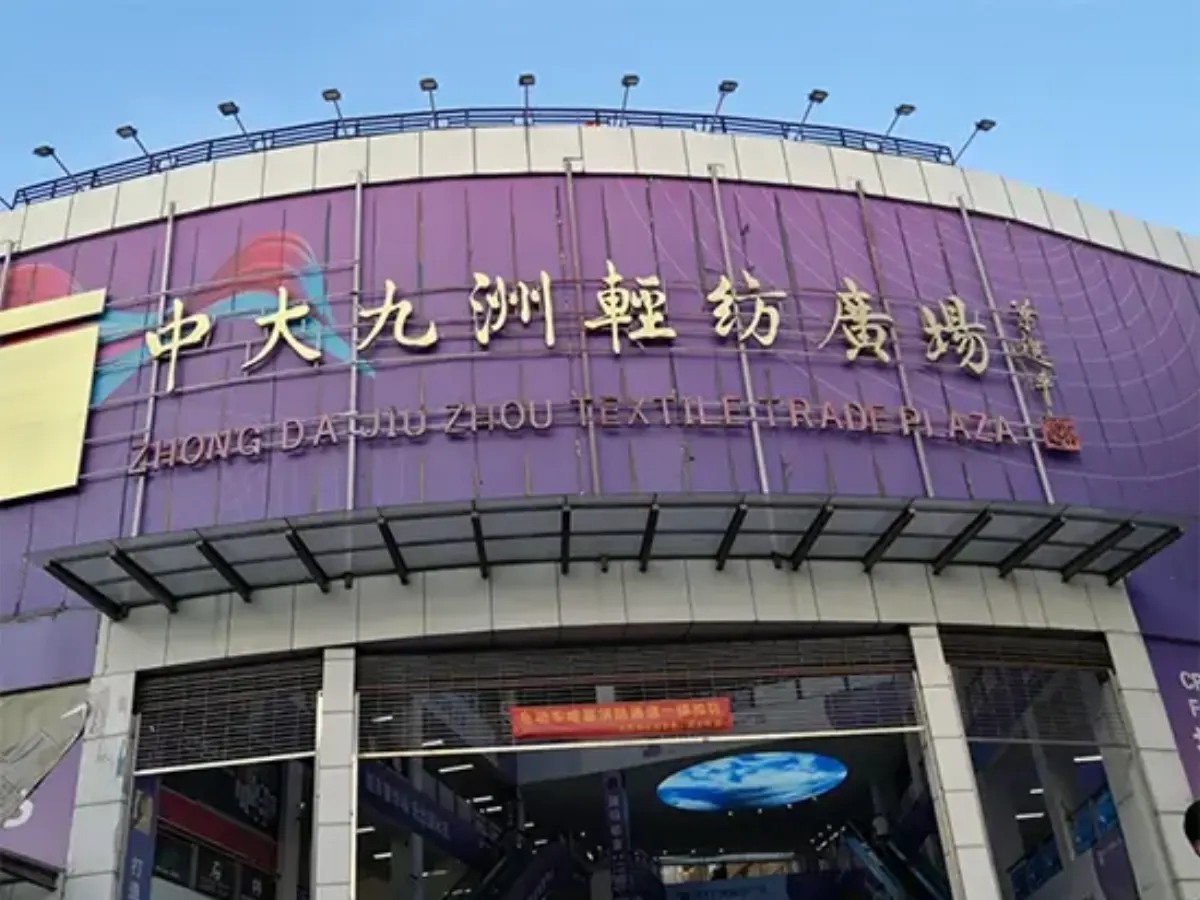
The Zhongda textile district in Haizhu is one of Guangzhou's most important material sourcing areas. Buyers use it to compare woven and knit fabrics, linings, elastic, lace, mesh, zippers, buttons, labels, webbing, packaging accessories, and other garment inputs.
Zhongda is useful during development because buyers can see options quickly and locate alternatives when a fabric, color, trim, or finish is not right. But a market swatch is not a production approval. Before using a fabric, confirm composition, usable width, weight, shrinkage, colorfastness, dye-lot consistency, replenishment availability, MOQ, and any test documents needed for the destination market.
Also check who the vendor actually is. Some vendors own production or represent a mill. Others are distributors buying through another layer.
Panyu and nearby factories for garment production
Panyu is often associated with flexible garment production, sample rooms, cutting, sewing, printing, embroidery, finishing, packing, and small-order production for online sellers and emerging brands.
That flexibility does not mean every factory accepts every small order. A 100-piece run from stock fabric may be possible in one situation, while a custom-dyed fabric, complex print, or special trim may push the real MOQ much higher. Ask for garment MOQ and fabric MOQ separately.
Xintang and Zengcheng for denim
Denim sourcing is different from basic cut-and-sew apparel. The finished product depends on fabric, wash, abrasion, pigment, enzyme treatment, fit, shrinkage, hardware, and environmental controls around wet processing.
If sourcing jeans, denim jackets, denim skirts, or washed workwear styles, approve a finished wash standard, not only an unwashed fabric cutting. Buyers should also verify where washing and finishing happen and whether that facility has appropriate wastewater and chemical-management controls.
Wholesale districts for trend discovery
Guangzhou's wholesale districts can help buyers study silhouettes, pricing, packaging, colors, and domestic fashion trends. They are useful for discovery, but a wholesale booth should not be treated as proof of factory ownership.
Use wholesale markets for market intelligence and supplier leads. Verify manufacturing capability separately.
What Guangzhou does well
Guangzhou is strongest when the product benefits from local coordination. That often includes women's fashion, casualwear, denim, knitwear, sportswear, uniforms, accessories, and private label apparel where fabric and trim decisions change during development.
The practical advantages include:
- Fast comparison of fabrics, trims, labels, packaging, and sample options.
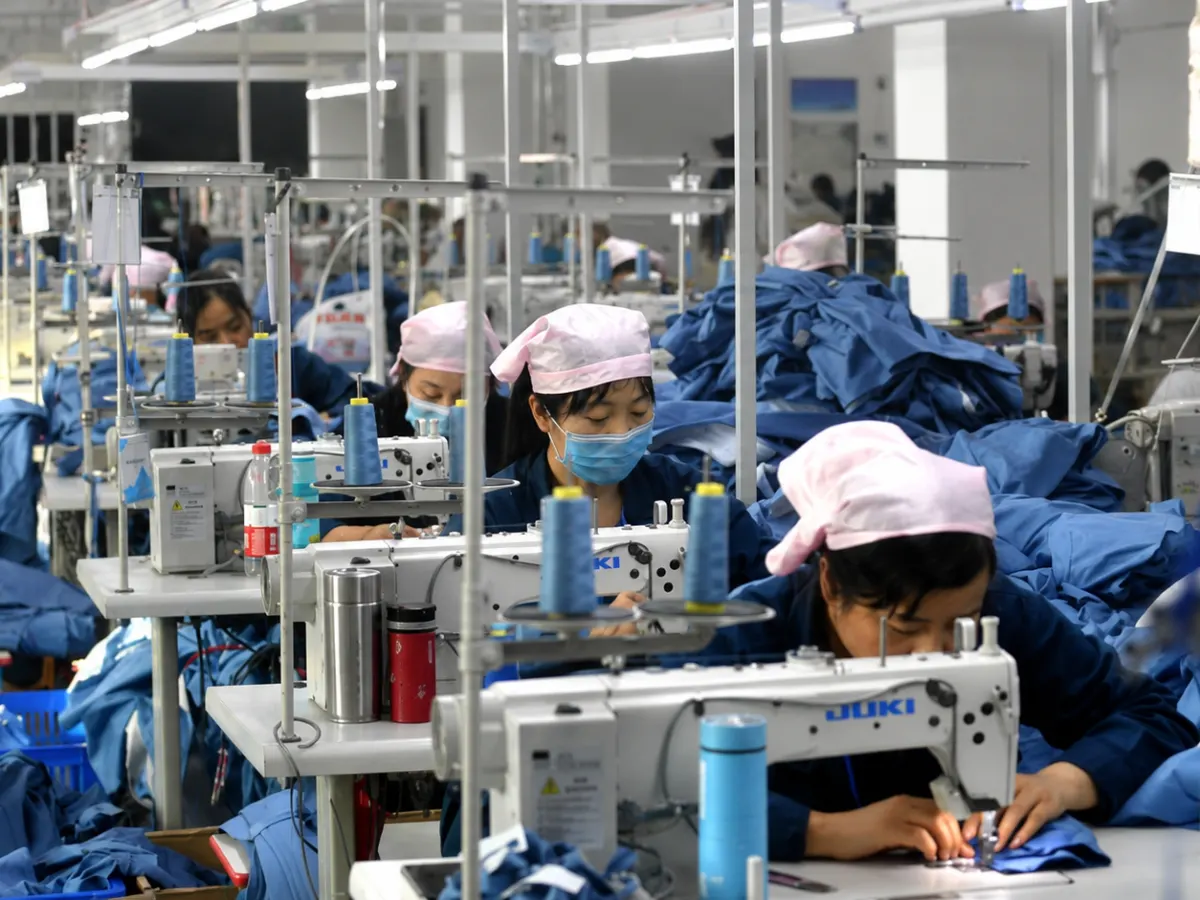
- Access to sample rooms, pattern makers, sewing factories, and finishing workshops.
- Flexible production networks for selected categories and quantities.
- Wholesale markets that help brands understand trend direction and price positioning.
- Export support through the Pearl River Delta, including Guangzhou Port, which Guangzhou International city news reported handled 26.45 million TEUs in 2024.
The same structure creates risk if the buyer does not control the details. Pattern making, cutting, sewing, printing, embroidery, washing, and packing may not happen under one roof. Buyers should know which operations are handled by the contracted supplier and which are subcontracted.
How to source apparel in Guangzhou
Start with the product, not the supplier list. A factory cannot quote accurately from a reference photo alone.
A usable apparel brief should include:
- Garment construction, measurements, grading, and size breakdown.
- Fabric composition, weight, structure, stretch, finish, and performance requirements.
- Color references, printing, embroidery, trims, labels, hangtags, and packaging.
- Order quantity by style, color, and size.
- Target market, compliance requirements, testing expectations, and labeling needs.
- Sample requirements, approval process, inspection plan, and target delivery date.
Once the brief is clear, compare supplier type and product fit. The best factory for a cotton T-shirt may not be right for a tailored coat, seamless activewear, children's sleepwear, or washed denim.
Samples and material control
Apparel sampling usually moves through several rounds: development sample, fit sample, revised fit sample, size set, pre-production sample, and final approved production reference. Not every project needs every round, but bulk production should not start without a written approval record.
The final approved sample is often called the golden sample. Freeze the measurement chart, fabric reference, trim details, color standard, artwork, construction notes, packaging, and open deviations beside it.
Material control matters as much as sewing. Depending on the product, buyers may need to check fiber composition, fabric weight, shrinkage, colorfastness, pilling, abrasion, stretch recovery, restricted substances, flammability, or other performance requirements.
Common Guangzhou sourcing mistakes
The first mistake is assuming every online seller is a factory. Review company registration, business scope, address, equipment, staff structure, sample-room capability, and subcontracting practices before treating a supplier as the manufacturer.
The second mistake is comparing prices before standardizing specifications. Two quotes are not comparable if one uses lighter fabric, excludes packaging, assumes a different trim, or ignores testing.
The third mistake is treating a sample as proof of bulk quality. A strong sample may come from a skilled sample room, while the bulk line may need different controls. Use inline checks and final inspection to confirm that production follows the approved standard.
The fourth mistake is ignoring material minimums. A sewing factory may accept a small garment order while the fabric mill requires a larger dye lot. This can force the buyer to choose stock fabric, buy excess material, or increase the order.
Compliance checks for apparel buyers
Compliance depends on product type and destination market, so brands should confirm requirements with qualified advisors, labs, customs brokers, or attorneys before production.
For the United States, FTC apparel labeling guidance says most textile and wool products need labels showing fiber content, country of origin, and the identity of the manufacturer or another responsible business. The FTC Care Labeling Rule also requires care instructions for textile wearing apparel. CPSC clothing guidance identifies 16 CFR Part 1610 as the general wearing-apparel flammability standard, with additional rules for certain children's sleepwear.
For the European Union, EU textile labeling guidance says textile products generally need labels or markings showing fiber composition when marketed to consumers. In June 2026, the European Commission reported that an EU-wide testing campaign found inaccurate fiber labels in 49 of 132 clothing samples, which is why buyers should verify composition instead of relying only on supplier declarations.
Visiting Guangzhou for apparel sourcing
A sourcing trip works best when meetings are arranged before arrival. A practical trip may include Zhongda for fabrics and trims, factory meetings in Panyu or another relevant cluster, denim supplier review in Xintang if needed, and wholesale market research for trend and price context.
The Canton Fair can also support supplier discovery. The official Canton Fair category list places men and women's clothing, kids' wear, underwear, sports and casual wear, fashion accessories, textile raw materials and fabrics, shoes, and bags in Phase 3.
Trade fairs and markets are useful introductions, not final verification. A booth, showroom, or market stall should still lead to sample approval, company checks, production planning, and inspection.
How Funda Sourcing supports Guangzhou apparel projects
Funda Sourcing helps overseas buyers move from supplier discovery to a controlled apparel sourcing plan. Depending on the project, that can include product brief review, factory identification, fabric and trim sourcing, quote comparison, sample coordination, supplier verification, production follow-up, lab-testing coordination, packaging and labeling review, inspection planning, and freight coordination.
For related planning, review how to compare suppliers beyond Alibaba, how to build a better sourcing brief, and quality check planning before production.
Frequently Asked Questions
Funda take
Guangzhou remains one of the world's most capable apparel sourcing environments, but its value comes from the ecosystem, not from one magic factory.
Use Zhongda for materials, the right factory cluster for production, and a controlled approval process for samples, compliance, packaging, and inspection. The buyers who benefit most from Guangzhou are the ones who bring clear specifications and verify every link between fabric, sample, production, and shipment.
Sourcing apparel from Guangzhou?
Send Funda your garment brief, target quantity, market, and sample goals. We can help compare supplier fit, materials, compliance needs, and production risk before you commit.

