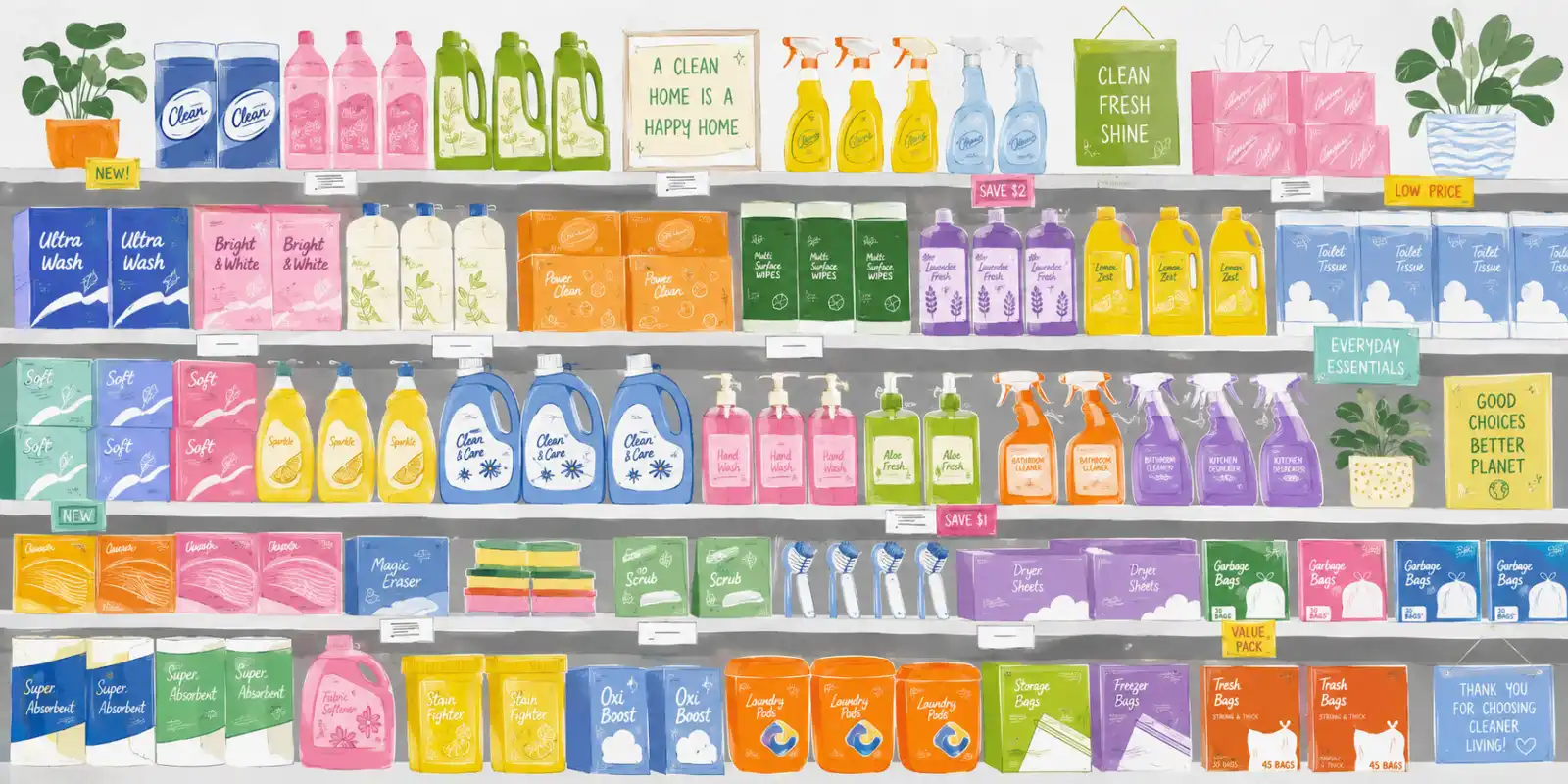
Customers can compare products across Amazon, Alibaba, Temu, retail stores, and independent websites within minutes. If your product is identical to dozens of alternatives, changing the logo may not give customers a strong reason to buy from you.
This guide explains how the private-label sourcing process works and what companies should consider before manufacturing products in China.
Quick answer
To private label products in China, define the customer and sales channel, write a clear product specification, compare several manufacturers, order and test samples, calculate landed cost, review compliance before printing packaging, confirm the purchase agreement in writing, and inspect before shipment.
What is a private-label product?
A private-label product is manufactured by one company and sold under another company's brand.
The brand usually controls the logo, packaging, product positioning, and sales strategy. Depending on the project, it may also customize the formula, material, color, fragrance, size, construction, accessories, or performance requirements.
Several manufacturing terms are commonly used:
- White label: A standard product with limited changes, such as a logo or label.
- Private label: An existing product customized for a specific brand.
- ODM: A manufacturer-developed product that can be adapted for the buyer.
- OEM: A product manufactured according to the buyer's design or specifications.
- Contract manufacturing: A more controlled arrangement involving detailed product requirements, formulas, designs, or intellectual property.
Factories do not always use these terms consistently. One supplier may call custom packaging "OEM," while another may use the same term for a fully customized product.
Instead of relying on the terminology, confirm exactly what the factory will change, manufacture, test, and protect in writing.
Is private labeling just adding a logo?
Sometimes it is. That is also why many private-label products feel interchangeable.
The better question is not whether the product can carry your logo. It is whether the product gives your customer a reason to choose your version instead of another supplier's version.
A private-label product can be differentiated through:
- Better materials or ingredients.
- Improved dimensions or construction.
- Exclusive colors, fragrances, finishes, or textures.
- Packaging designed for a specific sales channel.
- Different product counts or bundle combinations.
- Clearer instructions.
- More consistent quality requirements.
- Testing for a particular country or customer.
- Better service and after-sales support.
The product does not need to be invented entirely from scratch. A combination of thoughtful improvements can make an existing product more useful and relevant to a specific market.
How to private label a product in China
1. Define the customer and sales channel
Before contacting a manufacturer, decide who will purchase the product and where it will be sold.
A useful project brief should answer:
- Who is the target customer?
- What problem does the product solve?
- Where will it be sold?
- What retail price is realistic?
- What product claims will be made?
- Which countries will receive it?
- What makes it different from current alternatives?
A product sold through Amazon may need different packaging, carton dimensions, barcodes, labeling, and testing from a product sold to hotels, distributors, or retail stores.
Starting with the customer prevents a factory's catalog from controlling the entire product strategy.
2. Create a product specification
Do not send only a photo and ask, "How much?"
Prepare a written specification containing the measurable details of the product. Depending on the category, this may include:
- Materials or formula.
- Dimensions and tolerances.
- Weight.
- Color or finish.
- Performance requirements.
- Product count.
- Packaging type.
- Package dimensions.
- Master-carton quantity.
- Barcode placement.
- Required testing.
- Acceptable defects.
- Destination market.
- Target order quantity.
Clear specifications make quotations easier to compare and reduce misunderstandings during production. Without a written standard, the supplier may make decisions based on its normal production process rather than your brand's expectations.
3. Compare multiple manufacturers
Avoid selecting the first factory that responds.
Compare suppliers based on:
- Experience with the product category.
- In-house production capabilities.
- Export experience.
- Quality-control procedures.
- Available customization.
- Sample quality.
- MOQ.
- Lead time.
- Communication.
- Testing documents.
- Price and payment terms.
Ask whether the company is the actual manufacturer or a trading company. A trading company is not automatically a bad option, but the relationship should be transparent.
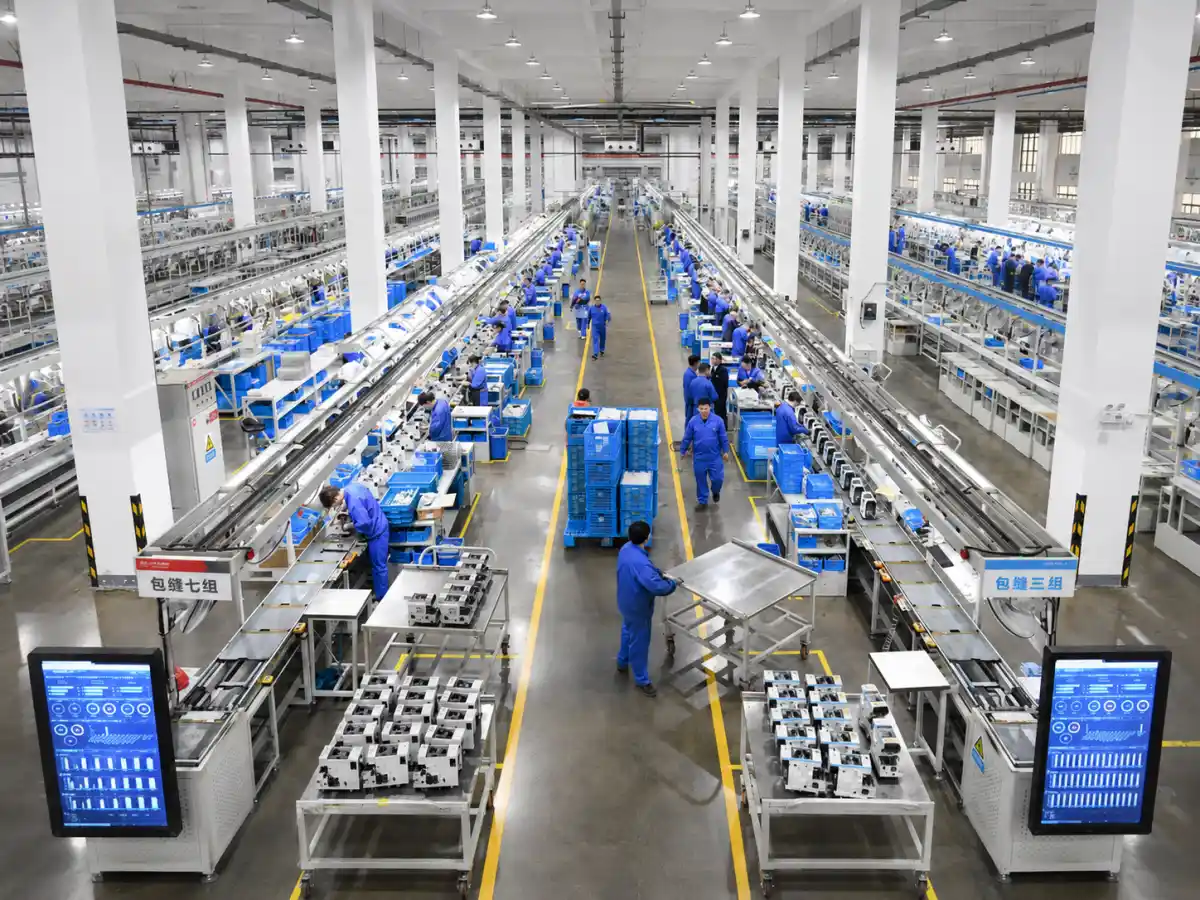
For larger or more technical orders, consider a video factory tour, supplier verification, or independent factory audit.
4. Order and test samples
Order samples from the strongest candidates before negotiating the final production order.
Test the product under realistic conditions. Review:
- Product performance.
- Appearance.
- Material quality.
- Durability.
- Packaging.
- Instructions.
- Odor or fragrance.
- Consistency.
- Ease of use.
Ask whether the sample came from normal mass production or was prepared separately in a sample room.
Once a sample is approved, keep it as the golden sample. It should be used together with the product specification and packaging proof as the standard for production and inspection.
5. Calculate the full landed cost
The factory price is not the final cost of the product.
A landed-cost calculation may include:
- Product cost.
- Custom packaging.
- Mold or tooling fees.
- Testing.
- Inspection.
- Transportation within China.
- International freight.
- Cargo insurance.
- Customs duty and tariffs.
- Customs brokerage.
- Port charges.
- Warehousing.
- Fulfillment preparation.
- Damage allowance.
A product with a slightly higher factory price may still be the better choice if it has a lower defect rate, more efficient packaging, or fewer compliance risks.
The purchase agreement should also state the Incoterm and named location. Terms such as EXW, FCA, FOB, and DDP divide responsibilities and costs differently between the buyer and seller. For U.S. imports, CBP guidance on commercial invoice value is a useful reminder that declared value is tied to what the buyer paid for the goods and may need to include items such as packing, assists, royalties, or production costs.
6. Review compliance before printing
Compliance should be reviewed before final packaging is printed.
Requirements depend on the product, claims, formula, country, and sales channel. They may include:
- Country-of-origin marking.
- Ingredient information.
- Warning statements.
- Safety data sheets.
- Batch identification.
- Importer information.
- Instructions.
- Product testing.
- Language requirements.
- Recycling information.
- Registrations or notifications.
For unfamiliar categories, confirm requirements with a qualified customs broker, compliance advisor, testing lab, or attorney. A manufacturer's opinion should not be treated as final customs or legal advice.
Companies should also search for conflicting trademarks before investing in packaging, molds, websites, or inventory. The USPTO federal trademark searching guidance explains why clearance searches matter before applying for a mark. If the product or packaging makes environmental claims, the FTC Green Guides summary is a useful starting point for understanding why broad claims need support and qualification.
7. Confirm the agreement in writing
Before paying the production deposit, confirm:
- Exact product specifications.
- Approved sample.
- Quantity.
- Unit price and currency.
- Packaging requirements.
- Production lead time.
- Payment terms.
- Inspection standards.
- Testing responsibilities.
- Defect remedies.
- Tooling ownership.
- Artwork usage.
- Confidentiality.
- Subcontracting restrictions.
- Shipping terms.
The manufacturer should not change the material, formula, component, package, or production location without written approval.
8. Inspect before shipment
A pre-shipment inspection compares the completed goods against the approved sample and written specification.
The inspection may cover:
- Quantity.
- Workmanship.
- Dimensions.
- Weight.
- Materials.
- Function.
- Branding.
- Packaging.
- Barcodes.
- Carton markings.
- Product-specific testing.
Problems are easier to resolve while the products are still at the factory. Once the order has shipped, replacement or reworking becomes much more expensive.
Example 1: Private-label dishwasher tablets
Dishwasher tablets may look like a simple private-label product, but the project can involve several important decisions.
The brand may need to choose:
- Tablet weight and size.
- Formula and cleaning performance.
- Fragrance or fragrance-free options.
- Wrapped or unwrapped tablets.
- Water-soluble film.
- Package count.
- Tin, pouch, carton, or refill packaging.
- Consumer or commercial format.
For example, one brand may sell 60 tablets in a reusable metal tin, while another may offer 20 tablets in a lightweight paper package for online orders.
The manufacturer, packaging supplier, printer, testing laboratory, and assembly facility may all be separate companies. These components must work together so the tablets remain dry, the packaging closes correctly, and the final product survives transportation.
Compliance requirements also depend on the formula and destination market. Warning statements and hazard classifications must be based on the actual formulation, not copied from another company's package.
In 2026, Funda Sourcing helped companies develop private-label dishwasher tablet products, including product selection, packaging structures, branded artwork, samples, factory communication, and shipping coordination.
Example 2: Tesla-compatible vehicle mats
A private-label vehicle mat requires more than selecting a color and printing a logo.
The buyer must confirm:
- Vehicle model and year.
- Left-hand-drive or right-hand-drive configuration.
- Front, rear, or trunk coverage.
- Material.
- Wall height.
- Surface pattern.
- Anti-slip backing.
- Retention clips.
- Odor requirements.
- Package dimensions.
The most important question is whether the mat fits the intended vehicle safely. It should not move, curl, interfere with pedals, or lose its shape after transportation.
The supplier may already own a suitable mold. If not, the project may require scanning, drawings, prototype development, and new tooling.
In 2026, Funda Sourcing supported the sourcing and development of custom-fit mats compatible with Tesla vehicle models. The work included manufacturer selection, model verification, material review, sampling, packaging, and production coordination.
Compatibility wording should be used carefully so customers understand the intended vehicle model without assuming the product is manufactured, sponsored, or approved by Tesla.
Example 3: Vinyl plank and SPC flooring
Vinyl plank and SPC flooring products can look similar in photographs while performing very differently after installation.
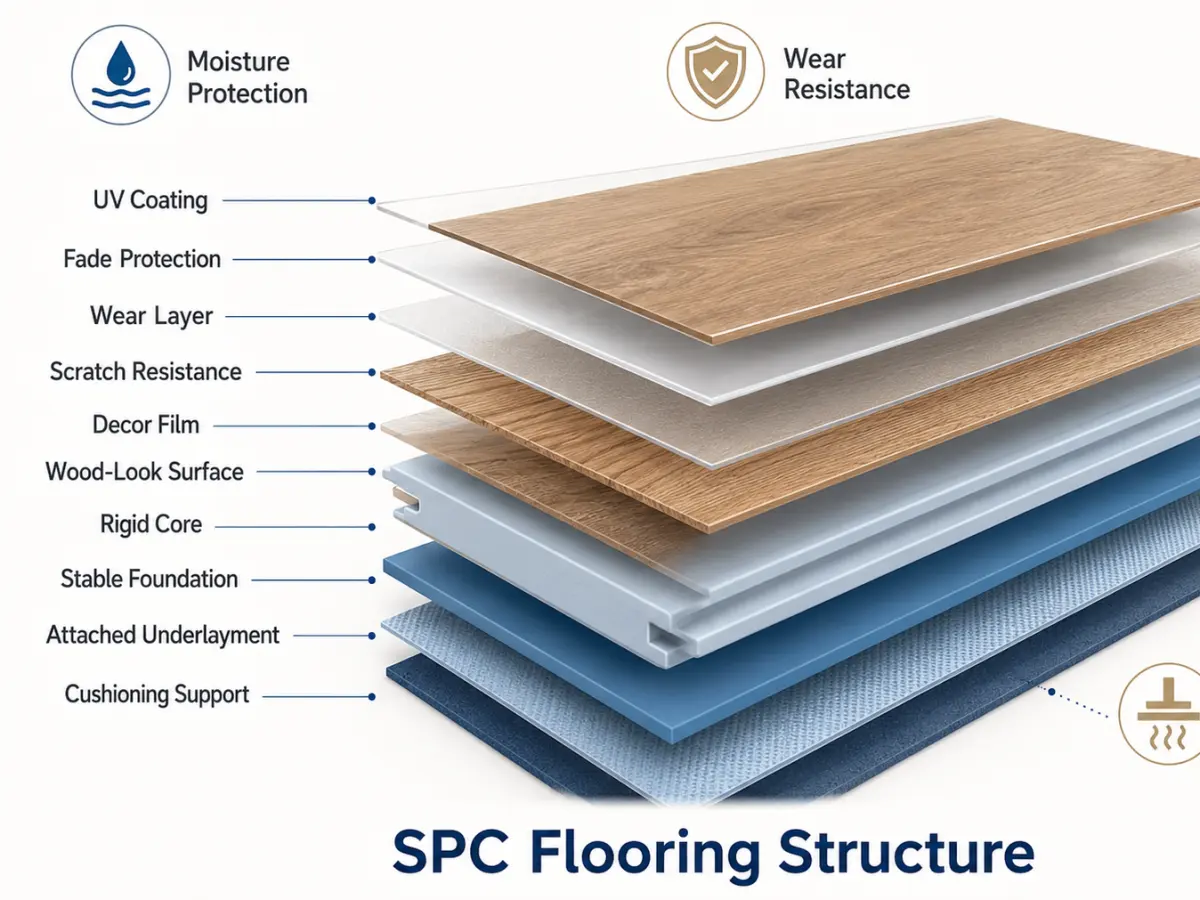
A flooring specification may include:
- Total thickness.
- Wear-layer thickness.
- Core density.
- Plank dimensions.
- Surface texture.
- Printed design.
- Gloss level.
- Bevel.
- Click-lock system.
- Attached underlayment.
- Waterproof performance.
- Carton quantity.
- Pallet configuration.
Small differences in the core, locking profile, underlayment, or manufacturing tolerance can affect installation and long-term performance.
Packaging and logistics are also important because flooring is heavy. Weak cartons, poor pallet configuration, or insufficient corner protection can lead to breakage and high delivery costs.
In 2026, Funda Sourcing helped companies source private-label vinyl plank and SPC flooring, including supplier comparison, sample coordination, technical specifications, branded packaging, quality expectations, and shipping.
In this category, the cheapest price per square foot is not always the lowest final cost. Installation complaints, damaged cartons, locking problems, and inconsistent colors can quickly eliminate the original savings.
Common private-label mistakes
Selecting only by price
The cheapest quotation may exclude packaging, testing, inspection, better materials, or important export services.
Approving the product but ignoring the package
A good product can still fail if its packaging leaks, tears, absorbs moisture, arrives damaged, or does not fit the sales channel.
Using only one supplier sample
Comparing samples often reveals major differences between products that appear identical online.
Printing packaging too early
A missing warning, importer address, country-of-origin statement, or translation can require an expensive reprint.
Skipping inspection
A sample approval does not guarantee that mass production will be identical.
Selling a completely generic product
A logo alone rarely creates long-term differentiation. Stronger private-label brands combine product improvements, clear positioning, reliable quality, useful content, and customer service.
Do you need a company in China?
Most foreign companies do not need to establish a Chinese subsidiary simply to purchase private-label products.
Orders can usually be managed through international contracts, sourcing companies, inspection providers, freight forwarders, and customs brokers.
A Chinese legal entity may become useful when a company plans to hire local employees, operate facilities, receive domestic payments, or establish a larger permanent presence.
It should be treated as a separate business decision, not a basic requirement for placing a factory order.
How Funda Sourcing supports private-label projects
Funda Sourcing helps companies source and develop products through supplier research, factory comparison, sampling, product specifications, packaging, negotiation, inspection, production management, and international logistics.
Whether the project involves dishwasher tablets, custom-fit vehicle mats, SPC flooring, home products, raw materials, or industrial goods, the process begins with a clearly defined product.
For related planning, review private label sourcing basics, private label packaging details, private label versus custom product, and quality check planning before production.
Frequently Asked Questions
Funda take
Private labeling is not automatically innovative, and it is not simply a shortcut. It is a manufacturing strategy.
Used poorly, it produces another catalog product with a different logo. Used well, it allows a company to build on an established manufacturing platform while improving the product, packaging, quality, and customer experience.
Before asking which product you can place your logo on, ask: who is the customer, what should the product do better, and why should someone choose it over the alternatives?
Planning a private label product from China?
Send Funda your product idea, target market, quantity, packaging needs, and launch timeline. We can help compare suppliers, coordinate samples, review packaging, plan QC, and connect production to shipping.

