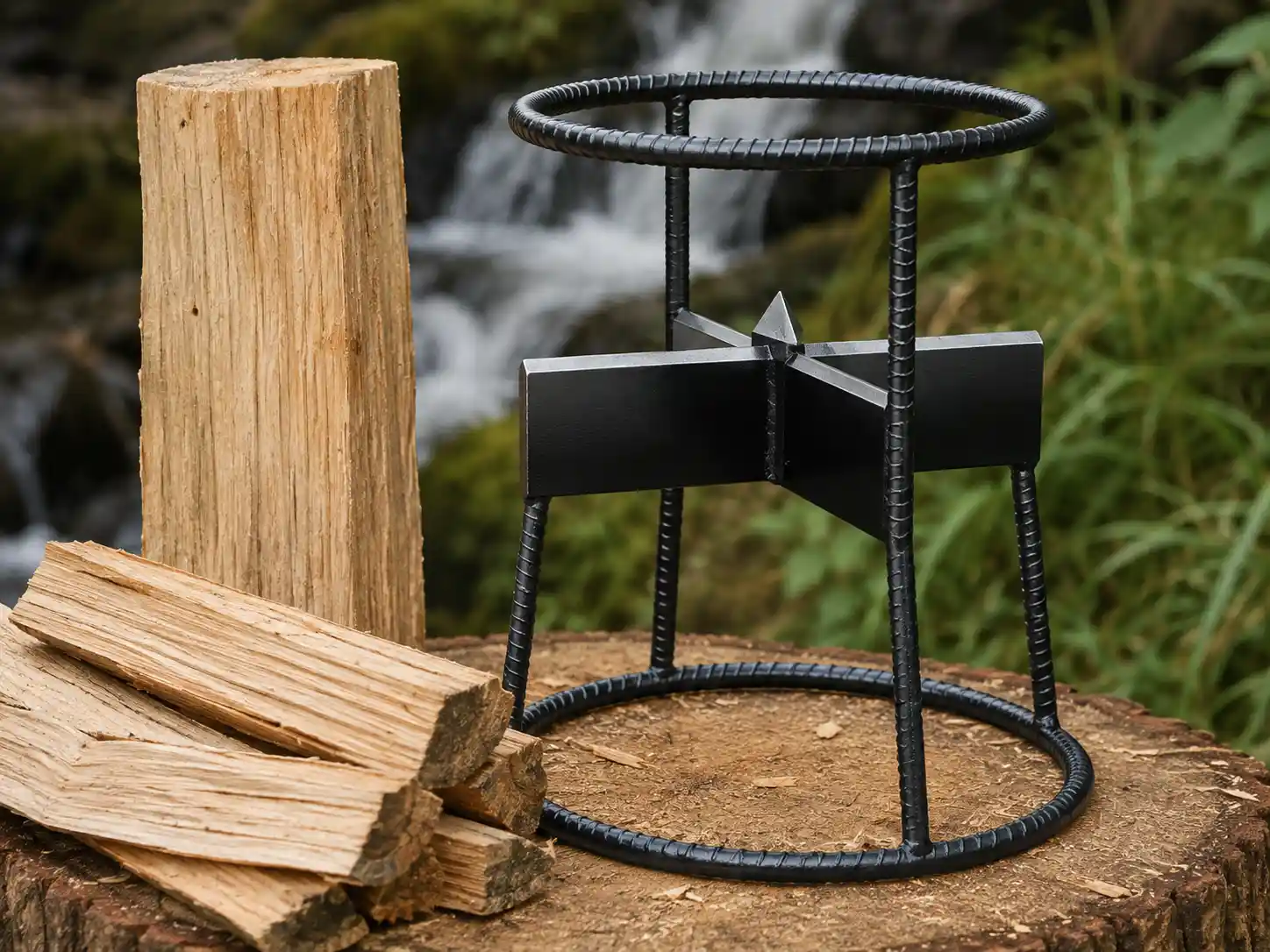
A clever outdoor firewood splitter looked ready for tooling after months of development. Then a patent check showed why every custom product should be screened for existing rights before a factory starts production.
Quick answer
Before asking a factory to make a new product, a buyer should check whether the product concept, mechanism, appearance, or intended use may overlap with an existing patent, registered design, trademark, or other intellectual-property right in the countries where the product will be made, sold, or imported.
The check does not need to stop every early idea. It does need to happen before the buyer commits to expensive tooling, production deposits, packaging, or a public launch. A 3D prototype can confirm whether an idea works. It does not confirm that the idea is legally clear to manufacture and sell.
The product idea: a smarter way to make firewood
The project came from a client in the Middle East who wanted to develop an outdoor tool for preparing firewood. The product was intended for use around outdoor fires, camping, and gatherings where people need smaller pieces of wood for burning.
The concept was simple and clever. Instead of swinging a conventional axe, the user would place a piece of wood into a guided splitting area and allow a weighted cutting mechanism to come down. Gravity would provide the downward force needed to split the wood into firewood pieces.
It addressed ordinary user concerns: storage, ease of use, less reliance on a full axe swing, and a more controlled position for the wood. It needed a strong frame, safe cutting geometry, a reliable guide, and a mechanism that could handle repeated impact.
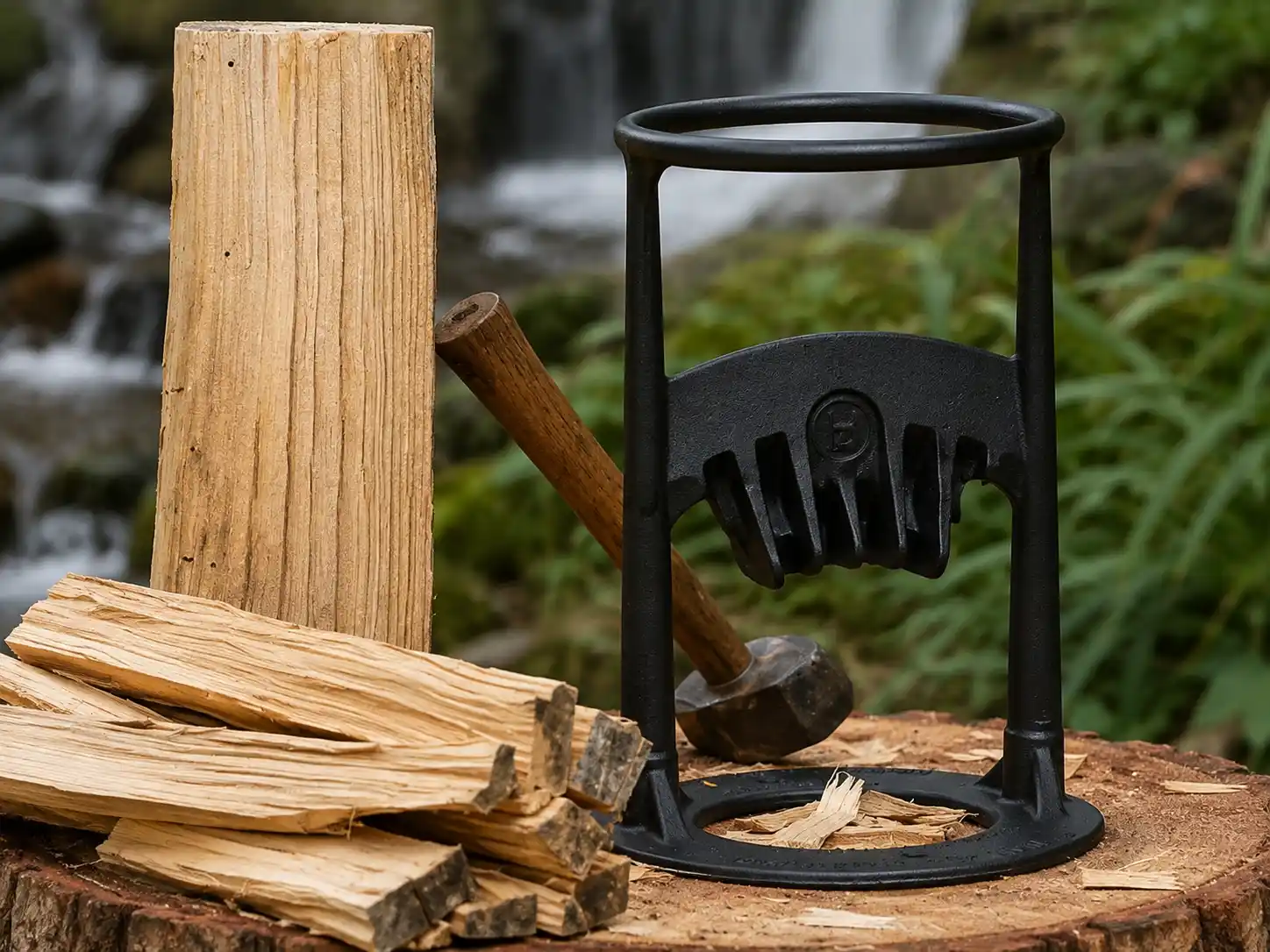
From a commercial perspective, the concept had several attractive features:
- It did not require electricity or fuel.
- It was easy to demonstrate in an outdoor-use video.
- Its visible mechanical action gave it a clear selling point.
From a sourcing perspective, it looked manufacturable. But manufacturable does not mean unprotected. That distinction became the most important lesson from the project.
Two to three months of development conversations
Funda worked with the client and the factory through repeated discussions about how the product should actually be made. The early concept drawing was not enough to answer the practical questions.
We discussed frame material and thickness, the cutting edge, moving weight, guide structure, handle, stability, packaging, corrosion protection, and the types of wood the product should accept. The factory also had to consider welding, machining, finishing, assembly, and safety.
Many ideas look easy until a factory asks how they will be made consistently. A mechanism may bind after coating, a frame may move on uneven ground, or a sharp edge may create packaging and handling risk. The conversations continued for roughly two to three months because product development is a cycle of questions, revisions, and samples.
Why we requested a 3D-printed prototype first
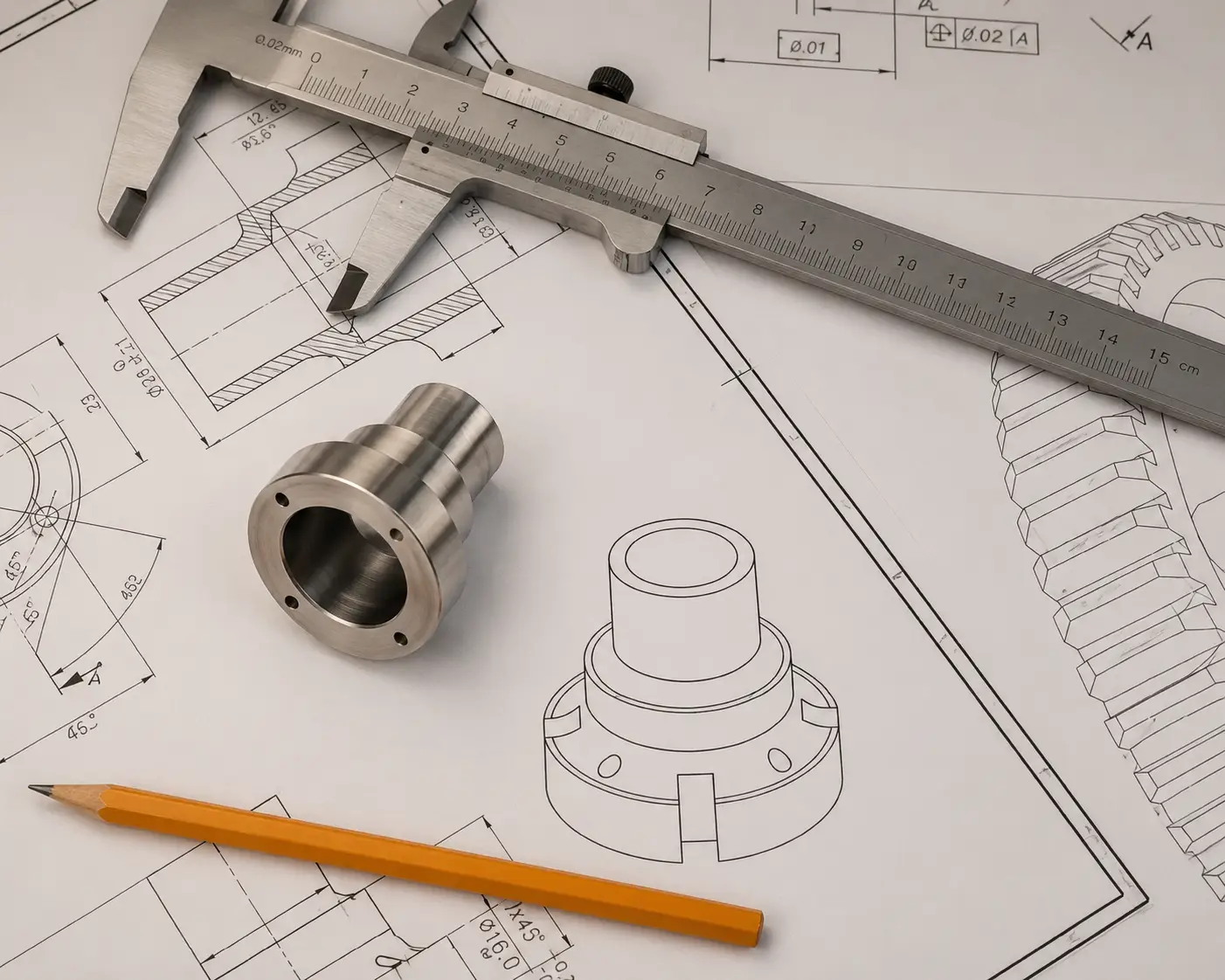
Before opening a production mold or committing to hard tooling, we agreed that the factory should print a 3D prototype for the client to review.
The 3D-printed prototype was not intended to prove final strength; it could not replace a metal sample, impact testing, or safety review. Its value was allowing the client to evaluate proportions, movement, grip, loading position, operating sequence, and packaging size before permanent tooling.
For a mechanism-heavy product, this can reveal problems that drawings hide and gives the buyer and factory a shared object to discuss. It slowed the project slightly but kept the team away from an irreversible tooling decision.
The discovery that changed the project
After weeks of discussion and revisions, we reached a point where the design appeared ready to move forward. Then, during a broader product and market check, we discovered that the concept might overlap with an existing patented firewood-splitting product.
Public information from Logosol describes its Smart Splitter as a Swedish patented invention. A Swedish industry publication also reported that Logosol acquired the Swedish company Agma and its patented Smart-Splitter and Smart-Holder products. The public product descriptions show a similar general category: a manually operated wood-splitting tool that uses a weighted mechanism and gravity to help split firewood.
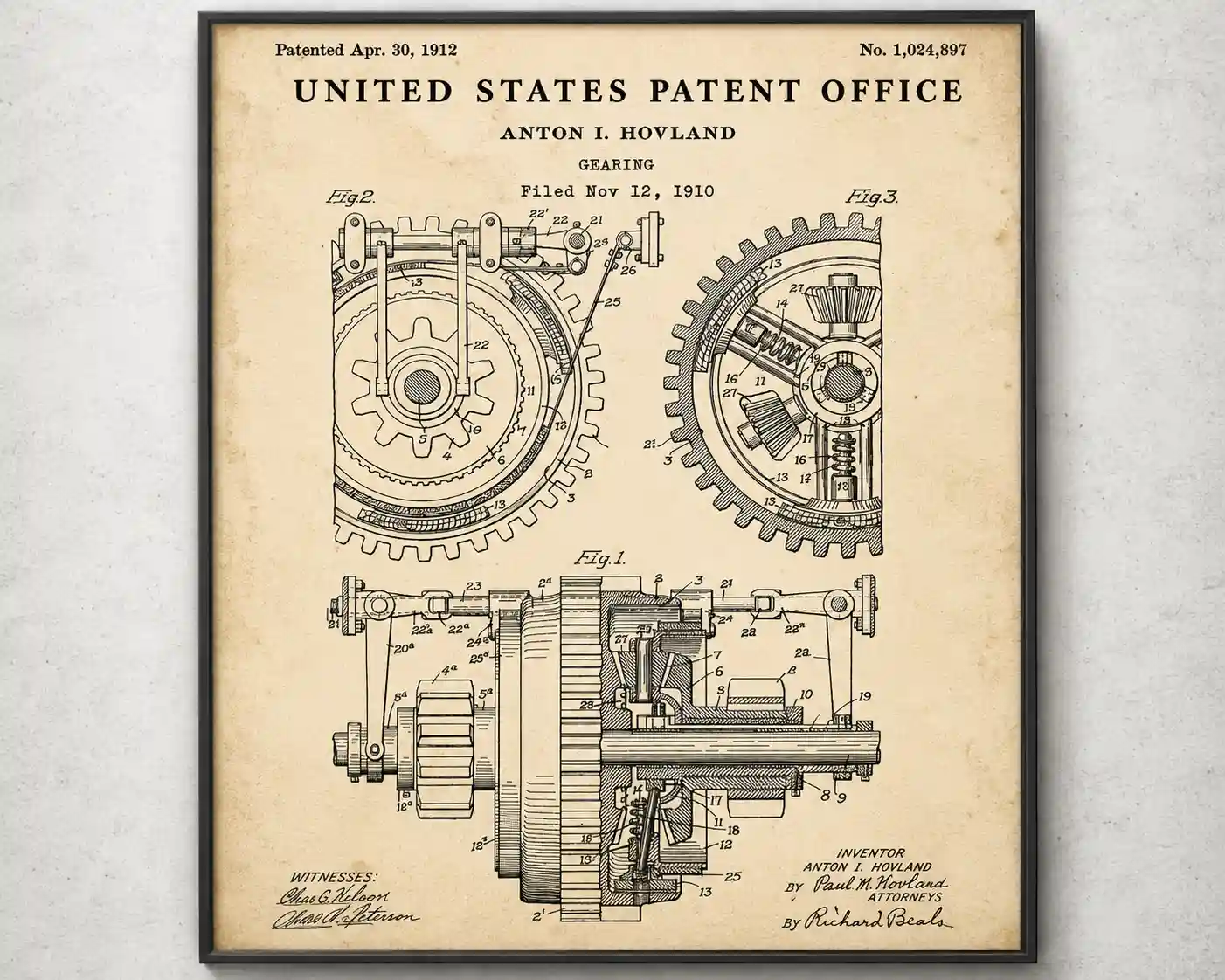
That public information did not answer the legal question by itself. Similar-looking products are not automatically covered by the same patent; the relevant issue is whether the proposed product falls within enforceable claims or design rights in the target markets. The factory could not simply proceed on the buyer's request if manufacturing, exporting, importing, or selling might create a dispute.
A similar appearance is not the only patent risk
Many buyers assume that patent risk exists only when a product looks identical to an existing product. For a mechanical product, the more important issue may be the functional relationship between its components.
A patent claim may focus on how a weight moves along a guide, how force transfers to a splitting wedge, how the blade connects to the support structure, how the log is positioned, or how components move and stop. Changing the color, handle shape, packaging, or surface finish may not remove the concern if the underlying mechanism remains substantially the same.
There is also no general rule that changing a product by a certain percentage avoids infringement. The proposed redesign needs to be compared with the enforceable claims in the relevant countries. That is why a close overlap should be reviewed by a qualified patent professional rather than judged from product photos.
A patent is not automatically global
According to WIPO's patent FAQ, patents are territorial rights. They generally apply in the country or region where protection has been granted. A patent owner may pursue protection in multiple countries through national filings, regional systems, or the PCT international application route, but a PCT application is not itself a single worldwide patent.
The analysis must match the commercial plan: check where the product will be made, sold, and imported. Do not accept a statement that a product is “protected everywhere” without checking the patent family, jurisdictions, claim status, and expiration dates.
The difference between a patent search and legal clearance
A basic search is useful, but it is not the same as a legal opinion.
A product team can search by product name, inventor, company, keywords, images, and classification. The USPTO Patent Public Search and WIPO's PATENTSCOPE can help locate U.S., international, and foreign filings.
The purpose of an early search is to identify warning signs:
- A product with the same mechanism already sold in the target market.
- A patent family with similar drawings, claims, or technical language.
- A design registration, trademark, or brand name that could create a separate issue.
If the search finds a meaningful overlap, ask a qualified patent attorney or agent to review it. The USPTO distinguishes an infringement or “freedom to operate” search from a prior-art search: one considers interference with existing rights, while the other often evaluates novelty or patentability.
Why the factory did not identify the problem earlier
Factories usually evaluate a project from a manufacturing perspective. They ask whether the components can be fabricated, which materials and machines are needed, what the MOQ will be, how much tooling may cost, and how long sampling will take.
Those are necessary questions, but they are different from asking whether the buyer has the right to manufacture and sell the product. Unless the contract assigns that work, a factory may not be performing a full foreign patent search or a freedom-to-operate analysis. A factory quotation should therefore never be treated as patent clearance.
What went well in this case
The project had already consumed real time, but the team found the issue before production tooling. Opening a mold, ordering material, printing packaging, or placing a deposit would have made the problem more expensive. The 3D prototype limited the sunk cost, and the factory's decision to pause was responsible.
What this case taught us
- Patent review is part of product sourcing, alongside sampling, quote comparison, quality control, and shipping planning.
- New CAD drawings or a 3D prototype do not create ownership of an older protected mechanism.
- Patent review before tooling gives the company more freedom to stop, redesign, license, or choose another concept.
- Compliance is part of becoming a supplier that serious retailers, distributors, investors, and long-term customers can trust.
A better development workflow for custom products
The lesson is not to avoid clever product ideas. It is to put an IP checkpoint earlier in the process.
1. Define the product before defining the tooling
Write down what the product does, how it works, which parts are essential to the mechanism, and which features are only preferences. This helps a patent professional assess the concept and helps the team identify which features could be redesigned.
2. Search before detailed factory development
Run an initial patent, design, trademark, and market search before spending months refining a mechanism with a factory. Search in the client's main sales markets and the countries where manufacturing or assembly may take place.
3. Use an NDA, but do not confuse it with patent protection
An NDA can help control confidential information shared with a factory. It does not give the buyer freedom to make a product that may infringe somebody else's patent. Confidentiality and freedom to operate are separate questions.
4. Prototype before tooling
Use sketches, CAD, 3D printing, CNC samples, or other low-cost prototypes to test the product experience and improve the design. For safety-related products, plan material validation, impact testing, instructions, warnings, and relevant market requirements before launch.
5. Obtain written professional guidance when the risk is material
If the search finds a close patent or registered design, ask a qualified professional to review the relevant claims and jurisdictions. Possible outcomes include redesigning the product, licensing the technology, limiting sales to certain markets, waiting for rights to expire, or ending the project.
6. Open tooling only after the decision is documented
The tooling approval should record not only dimensions and material requirements, but also who owns the design, what rights the buyer has, which markets are approved, and what IP review has been completed.
How Funda Sourcing supports product development
Funda can help buyers organize product briefs, factory questions, prototype stages, sample feedback, tooling decisions, and production documentation. We can also help identify when a project should be paused for patent, design, trademark, safety, or regulatory review.
Funda is not a substitute for a patent attorney. Our role is to help the sourcing process surface the right question early, collect the technical information clearly, and keep the factory from moving into an expensive production stage before the buyer has made the necessary decisions.
For related product-development planning, see common sample mistakes, private label versus custom product, sample approval before bulk production, and what a sourcing partner does.
Questions to ask before manufacturing
Before approving a custom mechanical product, ask:
- Where did the original product idea or reference come from?
- Is there an existing branded product using the same mechanism?
- Have patents and published applications been searched by product, inventor, and company?
- Have the relevant patent families and technical classifications been reviewed?
- Which countries will manufacture, import, and sell the product?
- Are the relevant rights still active in those countries?
- Which patent claims may apply to the proposed design?
- Can the mechanism be redesigned in a genuinely different way?
- Is a license available if the original owner controls an important feature?
- Has a qualified IP professional reviewed the commercial plan before tooling?
Frequently Asked Questions
Funda take
The most important lesson from this project was not that the product idea was bad. The idea was thoughtful, practical, and worth exploring. The lesson was that product development has two separate questions: can we make it, and are we allowed to make and sell it?
A 3D prototype can save money by exposing design problems before tooling. A patent screen can save even more by exposing legal problems before the factory starts building inventory. Growing companies are built on good ideas, reliable factories, and disciplined compliance.
This project did not end with a finished gravity log splitter. It ended with a decision not to rush into tooling for a product that might conflict with an existing patent. That was still a valuable sourcing result: the client avoided investing in molds, metal samples, packaging, inventory, and shipping before understanding whether the design could be commercialized.
A sourcing partner should not only help a client find a factory willing to say yes. Sometimes the correct answer is: stop, investigate, and confirm before manufacturing.
Before you place a tooling order, ask the question that this project taught us to ask earlier: who else may already have the right to make this idea?
Developing a product before checking its IP position?
Funda can help organize supplier conversations, prototype stages, technical files, and the questions your patent attorney needs before tooling or production.

