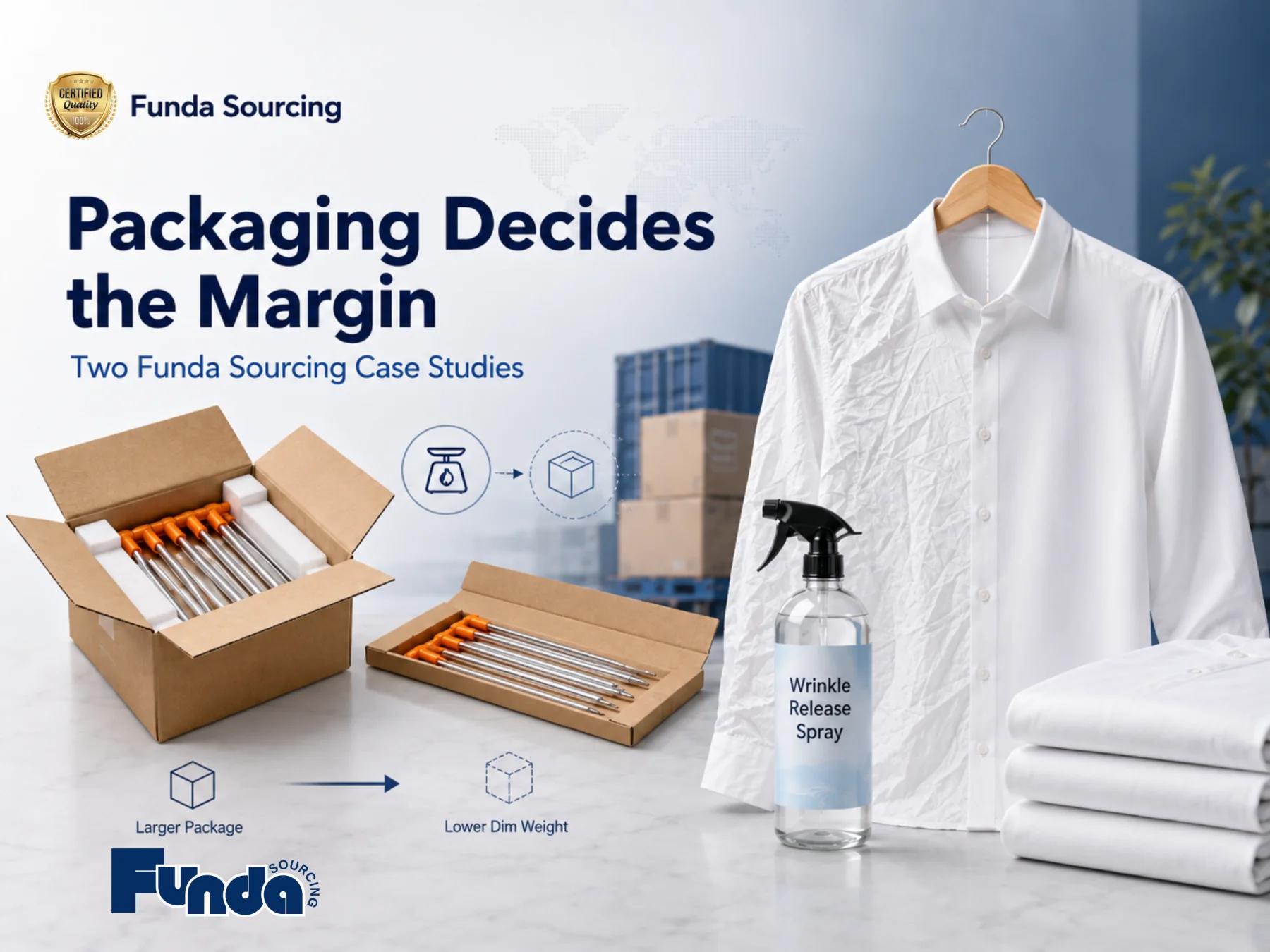
Most buyers spend weeks negotiating unit price and about twenty minutes on packaging. Then the freight invoice and the FBA fee schedule quietly take back what they won at the negotiating table.
A product can be inexpensive to manufacture and still be expensive to sell. Package volume, master carton efficiency, component reliability, shipping weight, and the number of units that arrive damaged all affect the real margin.
Two Funda projects show what this looks like in practice: a 12-piece aluminum Y-stake set that was shipping mostly air, and a wrinkle-release spray for clothing that needed a sprayer capable of working through the bottle.
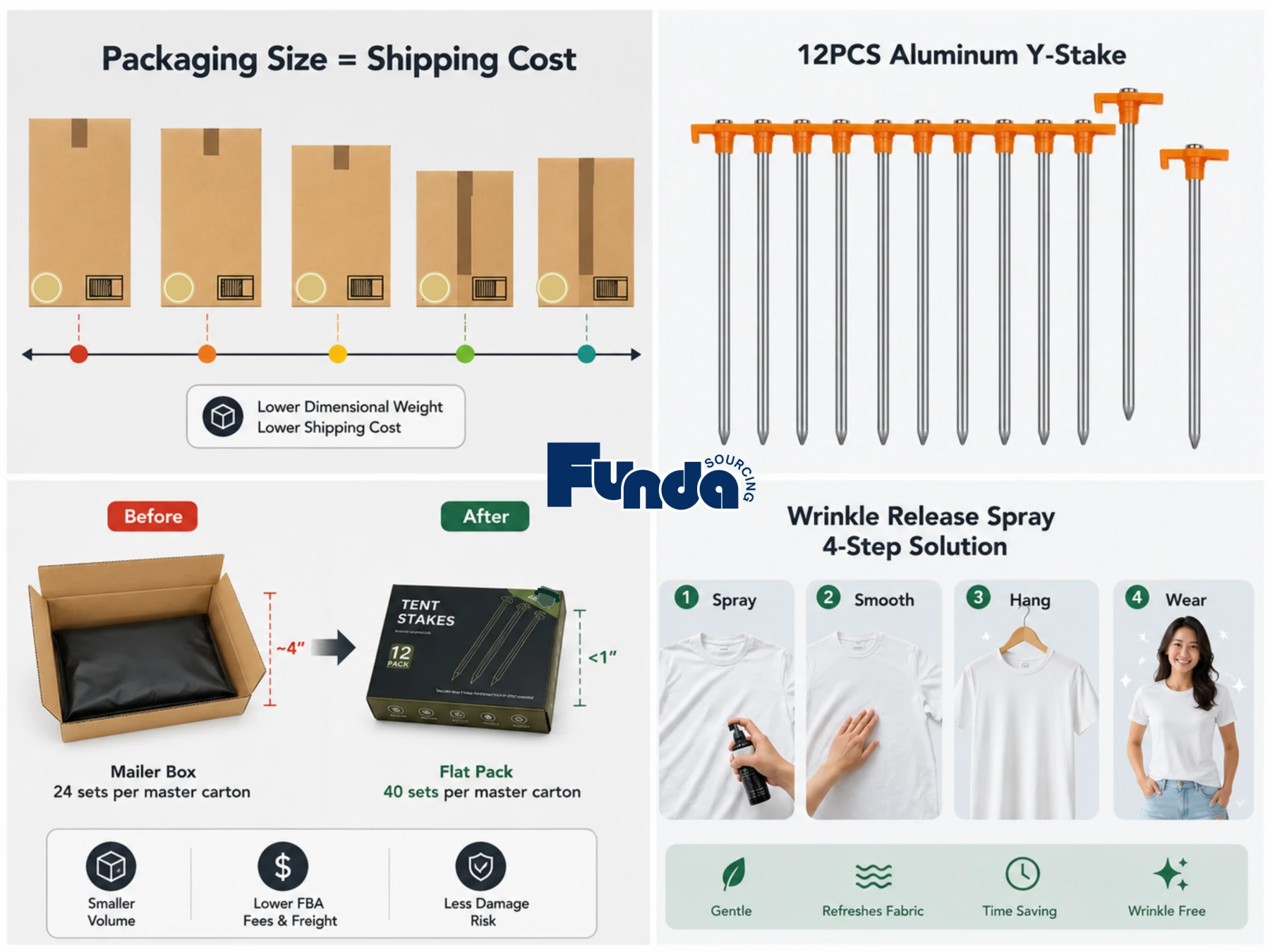
Quick answer: why packaging is a sourcing decision
Packaging affects more than appearance. It can influence:
- Product dimensions, cubic volume, and billable weight.
- Units per master carton and per-unit freight.
- FBA inbound, storage, and fulfillment economics.
- Damage risk during handling, transportation, and delivery.
- Product usability and customer experience.
- Whether a factory can assemble the finished product consistently.
For an Amazon FBA product, reducing unnecessary package volume can improve the cost structure. The actual result still depends on the marketplace, destination, current Amazon requirements, final dimensions, weight, and the complete fee calculation.
For a liquid product, the bottle and sprayer are functional parts of the product. A package that looks good but leaks is not a successful package.
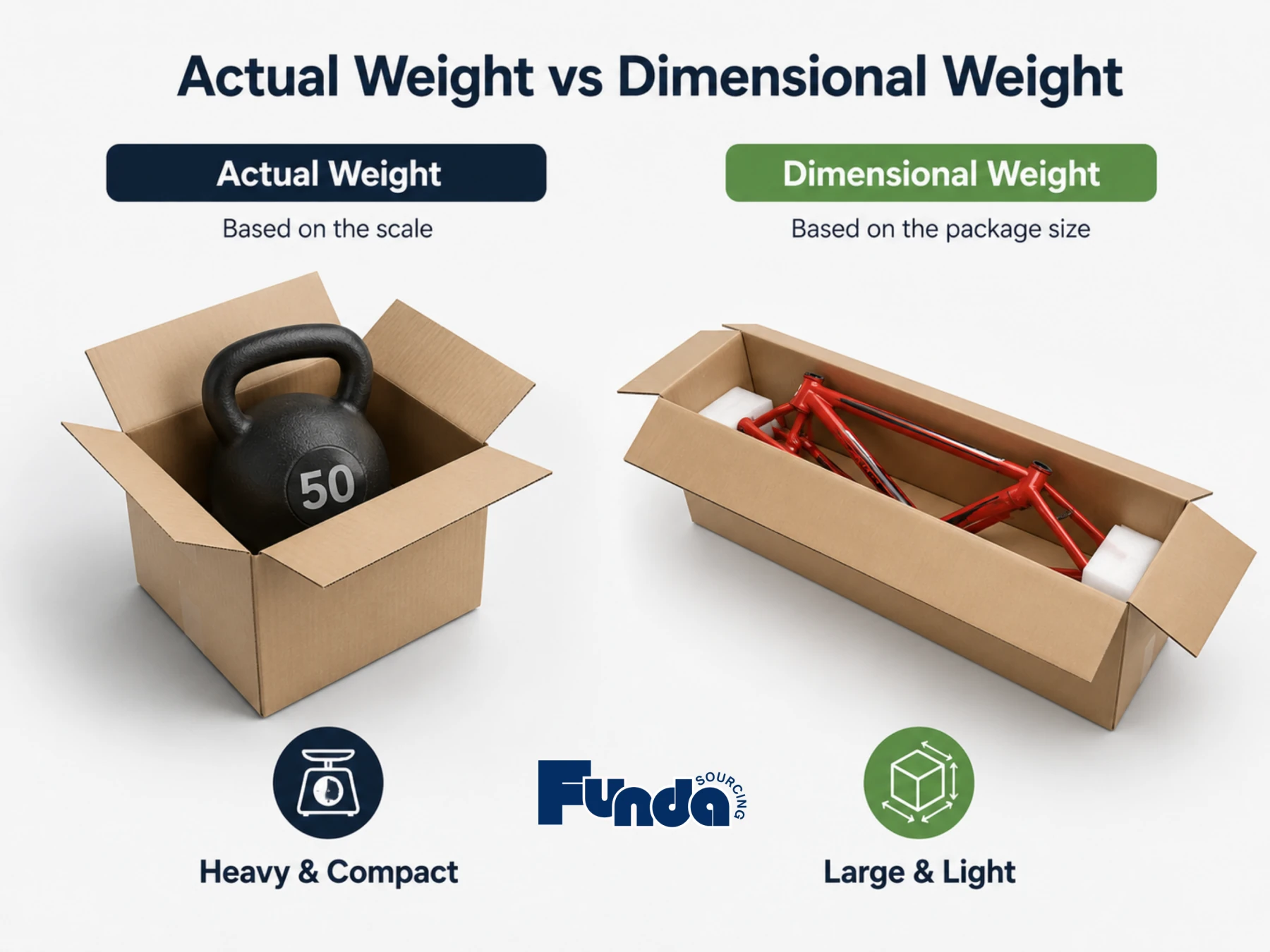
Case study 1: tent stakes that were shipping mostly air
A U.S. Amazon seller came to us with a 12-piece aluminum Y-stake set for camping tents. The product was fine. The packaging was not.
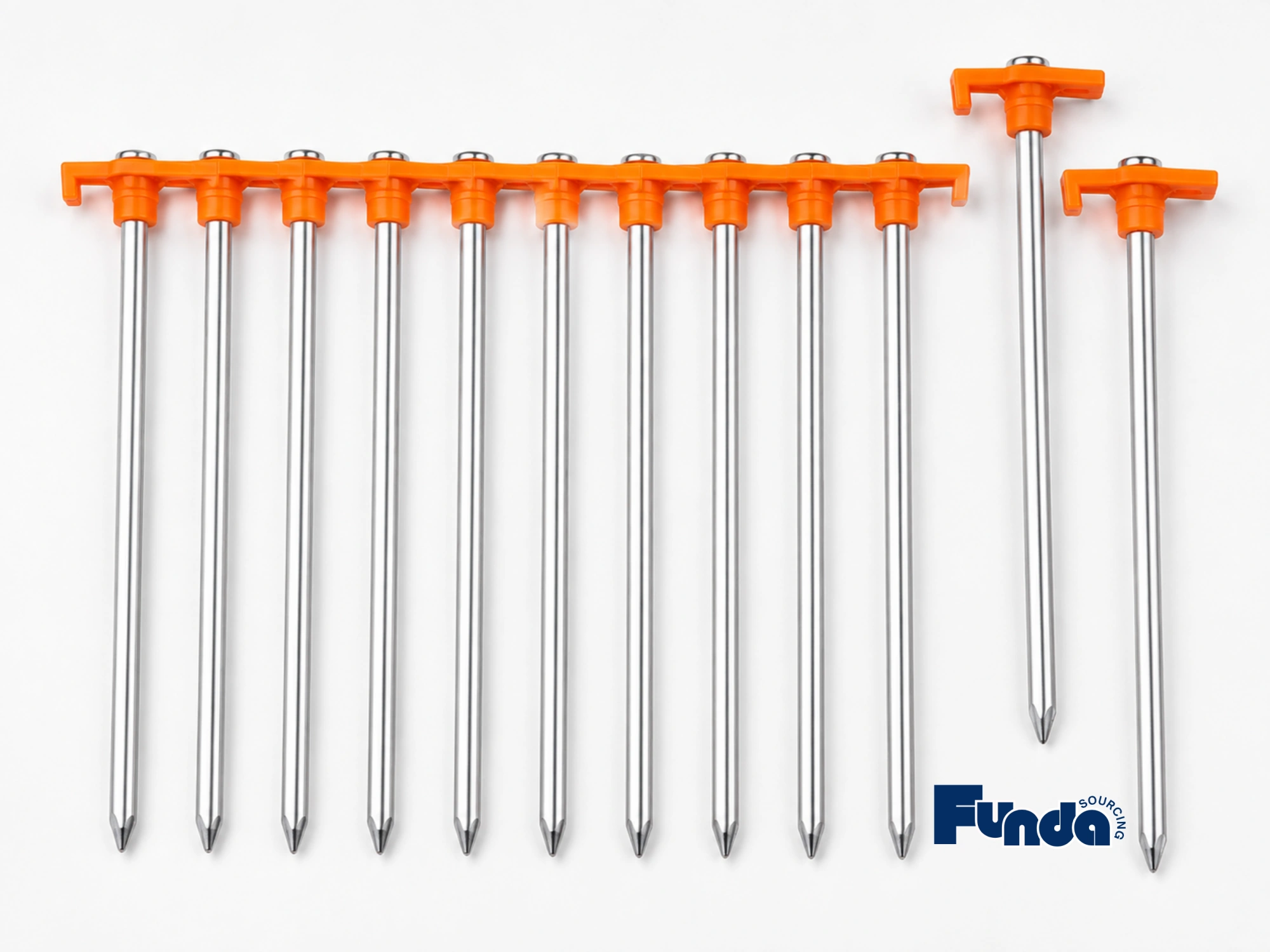
The stakes shipped in a nylon pouch, placed inside a corrugated mailer box with paper void fill. The box was roughly four inches deep, and about three of those inches were air.
That empty space cost money in several places. It increased the volume moving from the factory to the customer, reduced the number of units that could fit into a master carton, and exposed the product to a deeper box that could be crushed or wasted during handling. For the Amazon FBA calculation, the package dimensions were also affecting the billable weight rather than the product's actual weight alone.
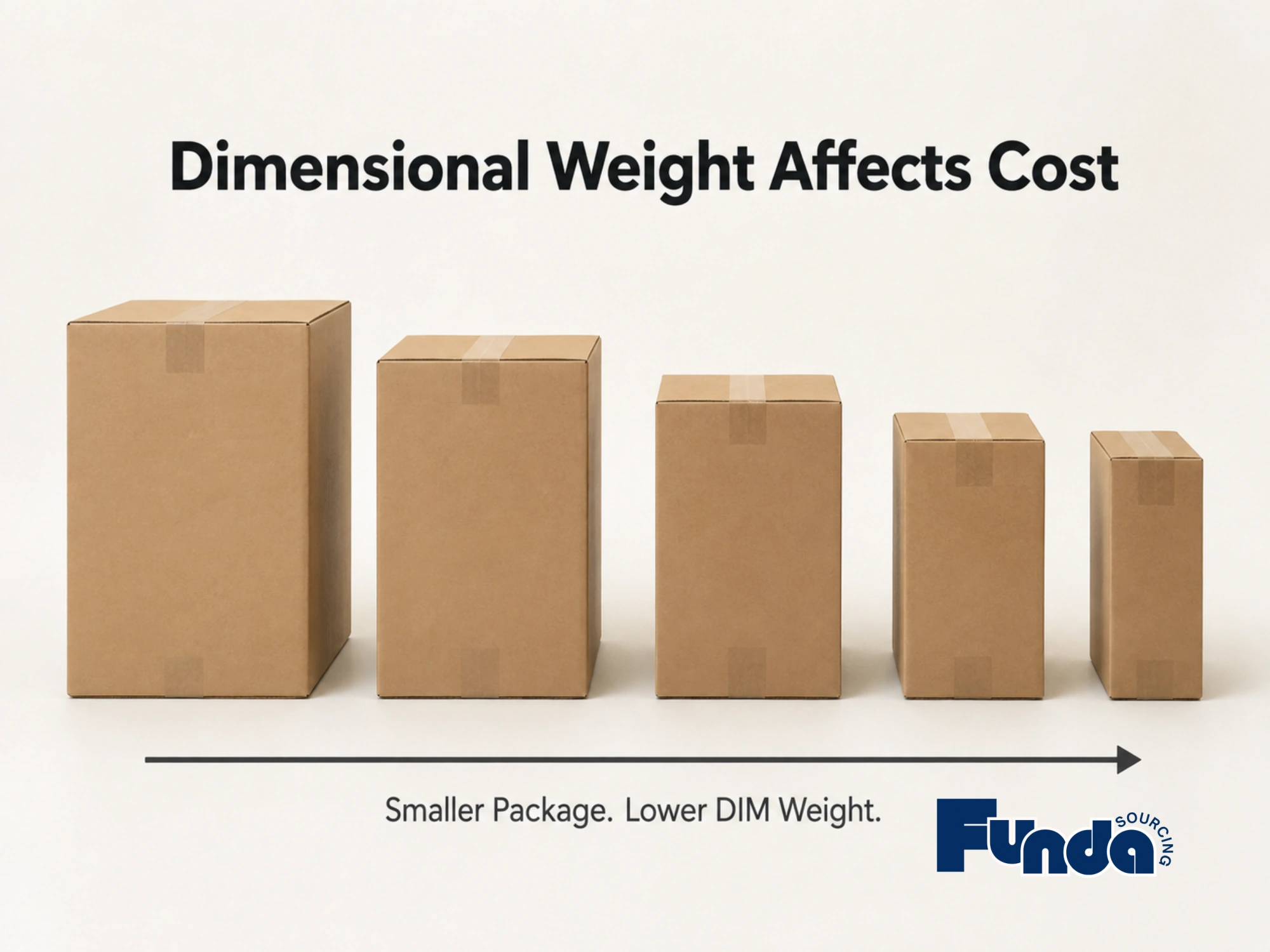
The client wanted to reduce FBA and freight costs without changing the factory unit price. One of the main goals was to bring the FBA shipping cost per unit down from $3.90 to $2.50. The challenge was to make the package flatter while still protecting the stakes, keeping the product presentation clear, and giving the factory a practical way to pack the set.
What we changed
We stopped treating the box as a simple container and started treating it as part of the product.
The Y-profile of the aluminum stakes allowed them to nest. By alternating the stakes head-to-tail, the ridges interlocked and the stack height dropped significantly. We specified a die-cut chipboard insert with individual channels, arranged the stakes in alternating orientations, folded the nylon pouch flat underneath, and placed a printed paper sleeve over the package.
The sleeve also created a flat front and included a hang hole for possible retail display. The finished package came in under one inch thick. The stakes stayed in place, the package stopped shipping mostly empty space, and the front face was flat enough for barcode placement and scanning.
Three rounds of packaging samples
The redesign took three rounds of samples:
| Round | What we checked | What changed |
|---|---|---|
| 1 | Structural fit and a blank white sample | The insert channels were 2 mm too wide, so the stakes migrated during transit. |
| 2 | Drop testing and a shipping test from the factory to the client | The insert was corrected and the sleeve paperboard was increased for stiffness. |
| 3 | Print proof, color, and barcode placement | The FNSKU was moved to the flat rear panel so it could be scanned more reliably. |
None of this is glamorous work. It is also where the margin improved.
The outcome
| Before | After | |
|---|---|---|
| Pack format | Mailer box, nylon pouch, and paper void fill | Flat sleeve with a die-cut insert and folded pouch |
| Pack depth | Approximately 4 in | Under 1 in |
| Units per master carton | 24 | 40 |
| FBA shipping cost per unit | $3.90 | $2.50 |
| Billable weight driver | Dimensional weight | Actual weight |
| Factory unit price | Baseline | Unchanged |
The factory price never moved. The commercial improvement came from changing the package: the client could fit more units into each master carton, remove unnecessary empty space, and bring the FBA shipping cost per unit from $3.90 to $2.50. That is the measured result from this project, not a universal saving that applies to every FBA product.
The result should still be evaluated against the current fee schedule and the final destination. But the project demonstrates why packaging dimensions deserve attention before production is approved. Private-label packaging details and shipping planning questions are easier to resolve before the product has already been packed.
Case study 2: a wrinkle-release spray for clothing and the sprayer that would not cooperate
The second client was launching a wrinkle-release spray for clothing, designed to help relax creases in fabric.
The client had a product direction and a launch plan, but the project required more than filling liquid into a bottle. The formula, bottle, sprayer, closure, packaging, and transportation method all had to work together.
Finding the right factory
Through our supplier network, Funda connected the client with a manufacturer experienced in this product category. The factory also had contract manufacturing experience for a leading Japanese brand.
That mattered for a practical reason. The client needed a partner who could discuss spray performance, bottle materials, packaging samples, and product use in detail—not simply quote a price and wait for artwork.
We supported the project from product development through packaging sampling, component selection, production coordination, and transportation.
Glass looked better. Plastic shipped and handled better.
The first packaging direction used a glass bottle. Glass can feel premium, but it also adds weight and creates more breakage risk during filling, packing, international transportation, and customer delivery.
After reviewing the product's intended use and shipping requirements, the team moved from glass to plastic. The plastic bottle was lighter and more durable for this project while still allowing the client to create the desired brand presentation.
This was not simply a decision between a premium material and a cheaper one. It was a decision about which container better matched the way a clothing-care spray would be made, shipped, stored, and used at home.
The sprayer problem
Finding a bottle was relatively straightforward. Finding a sprayer that remained reliable was much more difficult.
Common sprayer options had two serious problems:
Failure one: the sprayer leaked. A leak could appear during storage or transportation and leave liquid inside the outer packaging before the customer had used the product.
Failure two: the sprayer stopped working around the halfway mark. The bottle still contained liquid, but the spray became weak, inconsistent, or stopped altogether. For a wrinkle-release spray, that makes the product difficult to use on a full garment and can lead directly to complaints.
The spray pattern mattered as well. A fine, even mist should distribute moisture across fabric. A narrow stream or large droplets can wet clothing unevenly and make the product harder to use.
We contacted a long list of sprayer factories and worked through samples from several suppliers. We reviewed closure fit, sealing performance, output per stroke, spray pattern, durability through repeated use, dip tube length against the specific bottle base, and compatibility with the finished clothing-care liquid rather than plain water alone.
There was no catalogue item that solved every issue automatically. The bottle and sprayer had to be evaluated as one packaging system.
After repeated sourcing and sample discussions, the client moved to a more durable sprayer that was less likely to leak and more likely to keep working throughout the life of the bottle. We then carried the approved packaging direction through the remaining sample work, production follow-up, and shipment.
What both projects have in common
Camping tent stakes and wrinkle-release spray have almost nothing in common as products. The sourcing problem was nearly identical.
In both cases, the standard option was easier. The stakes could have stayed in the original four-inch box. The spray could have used the first available bottle and pump.
But available does not mean suitable.
- Packaging is a cost input, not decoration. On the tent stakes, the package was the largest practical lever because the factory price did not change.
- Test the part that actually fails. For a spray product, that is the pump and its relationship with the bottle and liquid—not the label.
- Write the details into the specification. The approved insert structure, package depth, carton quantity, bottle, and sprayer should not remain only in a chat message.
- Expect several rounds. The tent stake project needed three packaging sample rounds. A moving component such as a pump also needs repeated review before mass production.
For a broader explanation of where Funda fits into a sourcing project, see what a sourcing partner does. This article focuses on the packaging and product decisions in these two projects.
Frequently Asked Questions
Building a product that works from factory to customer
Good sourcing is not only about getting a product made. It is about making sure the product can be manufactured consistently, packaged efficiently, transported safely, sold profitably, and used reliably by the customer.
For the tent stakes, that meant replacing a four-inch mailer box and void fill with a flat package under one inch, increasing the master carton quantity from 24 to 40 units, and reducing the FBA shipping cost per unit from $3.90 to $2.50 without changing the factory unit price.
For the wrinkle-release spray, it meant finding an experienced manufacturer, changing from glass to plastic, and contacting multiple sprayer factories until the client had a more durable direction that addressed leakage and mid-use failure.
Viewed separately, these details may look small. Together, they decide whether a product is practical to sell.
Send Funda your product idea, target market, expected quantity, packaging requirements, and the problem you are trying to solve. We can help you identify the next practical step.
Developing a product or improving its packaging?
Funda helps brands find suitable factories, develop products, test packaging, coordinate production, plan quality checks, and manage logistics through shipment.

