Quick answer
Growing companies should develop more than one qualified supplier for important products or materials. This does not mean splitting every order equally. A small launch may begin with one supplier; once sales become predictable, compare capacity, lead time, material access, pricing, quality, and geographic exposure, then develop a second source for part of the volume, a specific SKU, or emergencies.
Why growth changes the supplier decision
One supplier can feel efficient when the order is small. Communication is simple, the sample history is in one place, and the factory knows the product. The problem appears when the company becomes dependent on that relationship without realizing it.
The factory may reach capacity. Lead times may increase during busy seasons. Material prices may change without a reliable benchmark. Relocation, equipment failure, ownership change, or a compliance problem may interrupt production.
Without a second quote, it becomes difficult to judge a material increase, lead time, or capacity claim. A delayed order from one supplier can affect the entire product line when there is no approved alternative.
This is why supplier diversification is not only a purchasing tactic. It is a business-continuity decision.
What large buyers understand about supplier diversification
In Funda's experience supporting sourcing work for large organizations and brands, including work involving GE, P&G, Unilever, and Honeywell, we repeatedly see the same operating principle: serious buyers build options into the supply chain before they urgently need them.
Large companies do not treat a supplier list as interchangeable factories. They qualify suppliers, define requirements, monitor performance, and decide which suppliers are primary, secondary, regional, or specialized. Public supplier resources from GE, P&G, Unilever, and Honeywell show the same focus on supplier governance, compliance, and continuity.
A smaller company can apply the principle with a simpler system: one approved primary supplier, one qualified backup, clear specifications, and a written plan for shifting volume.
The risks of putting every order with one factory
Single sourcing is especially fragile when the supplier controls information or materials that the buyer has not documented elsewhere.
Common risks include:
- Capacity risk: the factory accepts more orders than its lines, labor, or equipment can support.
- Lead-time risk: a seasonal rush, maintenance problem, labor shortage, or late material delivery moves the ship date.
- Pricing risk: the buyer has no current quote benchmark and must accept a price change without a meaningful comparison.
- Continuity risk: relocation, ownership change, equipment failure, compliance findings, or financial trouble affects production.
- Quality risk: the supplier becomes too important to challenge, so recurring defects are tolerated because moving feels difficult.
- Knowledge risk: product codes, material specifications, tooling information, and packaging files exist only inside one supplier's system.
- Commercial risk: one late order can create a stockout across several channels or interrupt an entire product launch.
The solution is not to collect ten factory names. Ask instead: if the main supplier could not ship next month, which other supplier could produce the approved product, and what would still need to change?
A real sourcing lesson from artificial grass
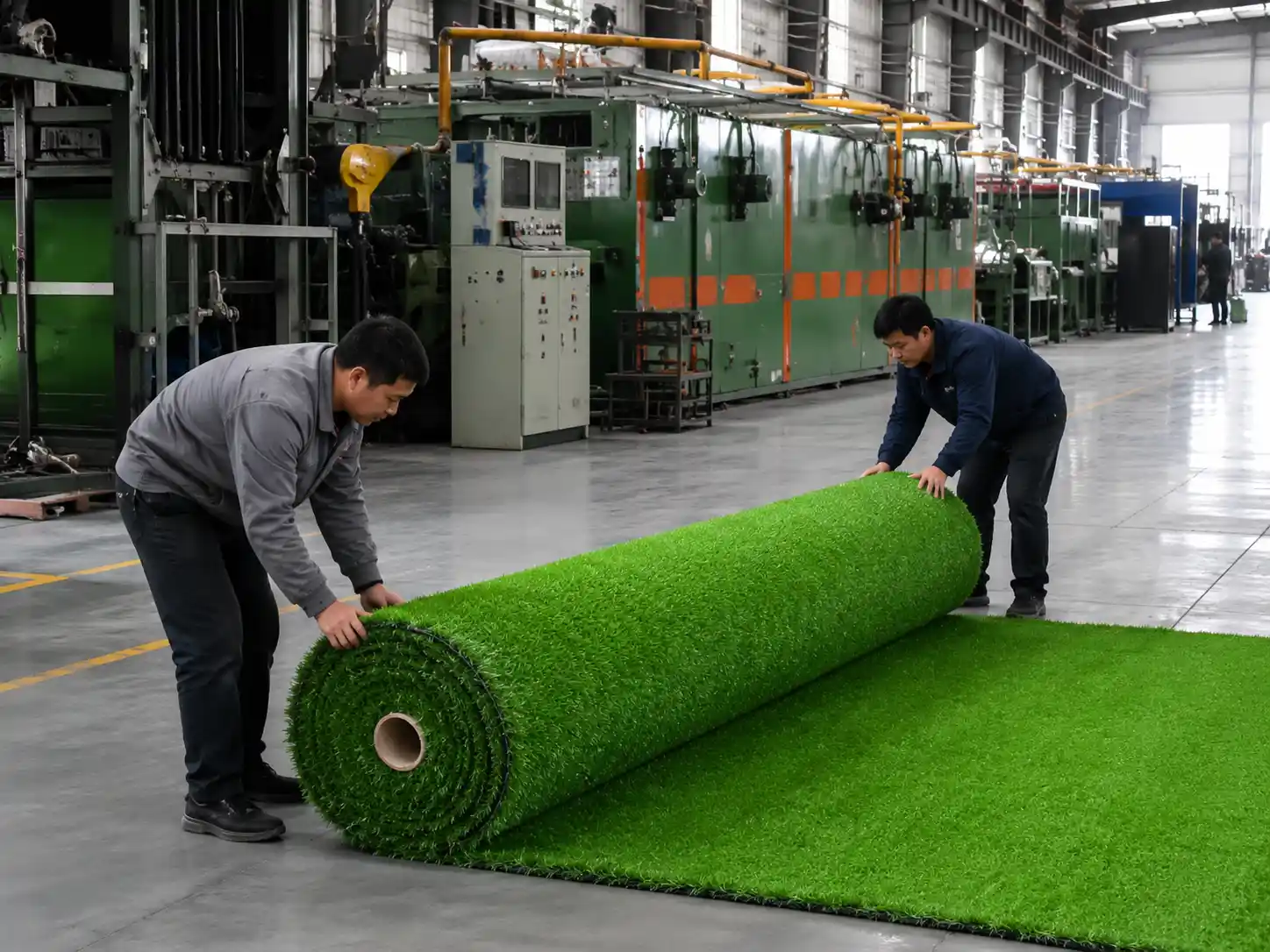
Artificial grass is a useful example because the product looks simple but includes many variables: yarn type, pile height, stitch gauge, backing, roll width, color blend, UV performance, drainage, and packaging. A material or process change can affect appearance, weight, durability, freight, and customer complaints.

In one sourcing situation, the initial production plan placed the available capacity in Mexico. For a product sold into North America, this was a logical starting point. Mexico can offer geographic proximity, shorter regional logistics, and the possibility of more favorable duty treatment when the specific product qualifies under the applicable rules of origin.
That last point matters. A product is not automatically tariff-free just because it ships from Mexico. The buyer still needs the correct tariff classification, a defensible country-of-origin analysis, and confirmation that the product meets the relevant trade agreement requirements. The U.S. International Trade Commission's Harmonized Tariff Schedule and the U.S.-Mexico-Canada Agreement information from USTR are useful starting points, but a customs broker should review material facts before a company makes a major country-of-origin decision.
The Mexico-first plan made commercial sense at the beginning. As order volume increased, however, relying on one country's capacity and operating conditions exposed every customer to a delay in yarn, backing, labor, equipment, quality approval, or logistics.
The more stable answer was not to abandon Mexico. It was to keep Mexico as one part of the network and move a portion of capacity to qualified suppliers in other countries. That only helps if the second source can make the same commercial standard and does not depend on the same constrained material.

How to build a practical multi-supplier strategy
Most growing brands do not need a complicated global procurement department. They need a sequence that matches their volume and risk.
1. Keep one supplier accountable for the approved standard
The primary supplier should remain responsible for a documented product. Record the approved sample, bill of materials, dimensions, tolerances, colors, packaging, inspection points, and acceptable substitutions.
For artificial grass, that may include pile height, yarn profile, stitch rate, backing layers, roll dimensions, weight tolerance, color blend, edge finish, and packaging method. The exact list will change by product, but the principle is the same: the second supplier cannot match a product that exists only as a conversation.
2. Develop the second supplier before a crisis
A backup supplier should be sampled and reviewed while the primary supplier is still performing. Ask the second factory to quote the same specification and clarify which parts it can produce in-house, which materials it buys, and which steps it outsources.
A small trial order or limited SKU can confirm whether the supplier can hold the standard in real production.
3. Decide what should be shared and what should be specialized
Some companies use two suppliers for the same product. Others assign suppliers by SKU, market, material, or process. One supplier may handle standard artificial grass rolls while another produces a special color blend or backing structure. Shared specifications and approved reference samples make a switch more practical.

4. Use the second source as a benchmark, not only as insurance
A qualified second supplier gives the buyer a current view of pricing, capacity, materials, and lead time. Compare factory price, material assumptions, MOQ, samples, packaging, inspection, freight, duty exposure, payment terms, and delivery date. A cheaper quote is not useful if it uses a different yarn, weaker backing, smaller roll, or different trade term.
5. Review the allocation as the business changes
Review allocation after major sales growth, a new market launch, a redesign, a tariff change, a quality event, or a major factory delay. A primary supplier can handle most volume while a second receives enough business to remain qualified. The percentage matters less than whether the second supplier is real, current, and able to respond.
What to document before moving production
Before shifting an order, prepare a transfer package that includes:
- Approved physical sample, product specification, bill of materials, dimensions, tolerances, and test requirements.
- Packaging artwork, labels, barcodes, carton marks, and pallet requirements.
- Material names, grades, colors, suppliers, and acceptable alternatives.
- Quality checklist, defect definitions, lead times, MOQ, payment terms, and shipping assumptions.
- Country of origin, likely tariff classification, broker documents, product codes, tooling, artwork, and technical files.
This documentation protects the brand from a different kind of dependency: the factory may not own the product, but it may control the information needed to reproduce it.
When multiple suppliers are not the right answer
Using multiple suppliers adds communication, sampling, quality review, production follow-up, payment coordination, packaging, and freight work. Splitting a very small order can also increase unit cost and reduce leverage.
For a new product with uncertain demand, one well-chosen supplier may be the sensible first step. The decision should change when the product becomes important enough that one delay, one capacity limit, or one price change could damage the business. At that point, developing a second source is usually cheaper than trying to create one during an emergency.
How Funda Sourcing supports supplier diversification
Funda helps buyers build supplier options around the real product rather than country headlines. That can include comparing factories in China, Mexico, Vietnam, Thailand, and other suitable regions; coordinating samples; normalizing quotes; reviewing material and packaging assumptions; and planning inspection.
Funda can also help organize a country-of-origin and landed-cost question list for the buyer's customs broker. Verify tariffs, classifications, trade agreements, and origin rules for the exact product and shipment.
For the practical steps around this strategy, see how to compare suppliers beyond Alibaba, how to review factory quotes, quality check planning before production, and sourcing from China, Vietnam, and Thailand.
Frequently Asked Questions
Funda take
Growth changes what reliability means. When orders are small, one responsive factory may be enough. When the product becomes important to the business, relying on one supplier for every order can turn a convenient relationship into a single point of failure.
The strongest approach is gradual: choose a capable primary supplier, document the product, qualify a second source, test a manageable volume, and review allocation as demand changes. The artificial grass case shows why a country can be a sensible first answer without being the only answer forever.
Multiple suppliers are not a sign that the first factory failed. They are a sign that the buyer is protecting the product, the customer, and the next stage of growth.
Planning a second supplier or a new production country?
Funda helps buyers compare factories, coordinate samples, standardize specifications, and develop a more reliable sourcing plan as order volume grows.

