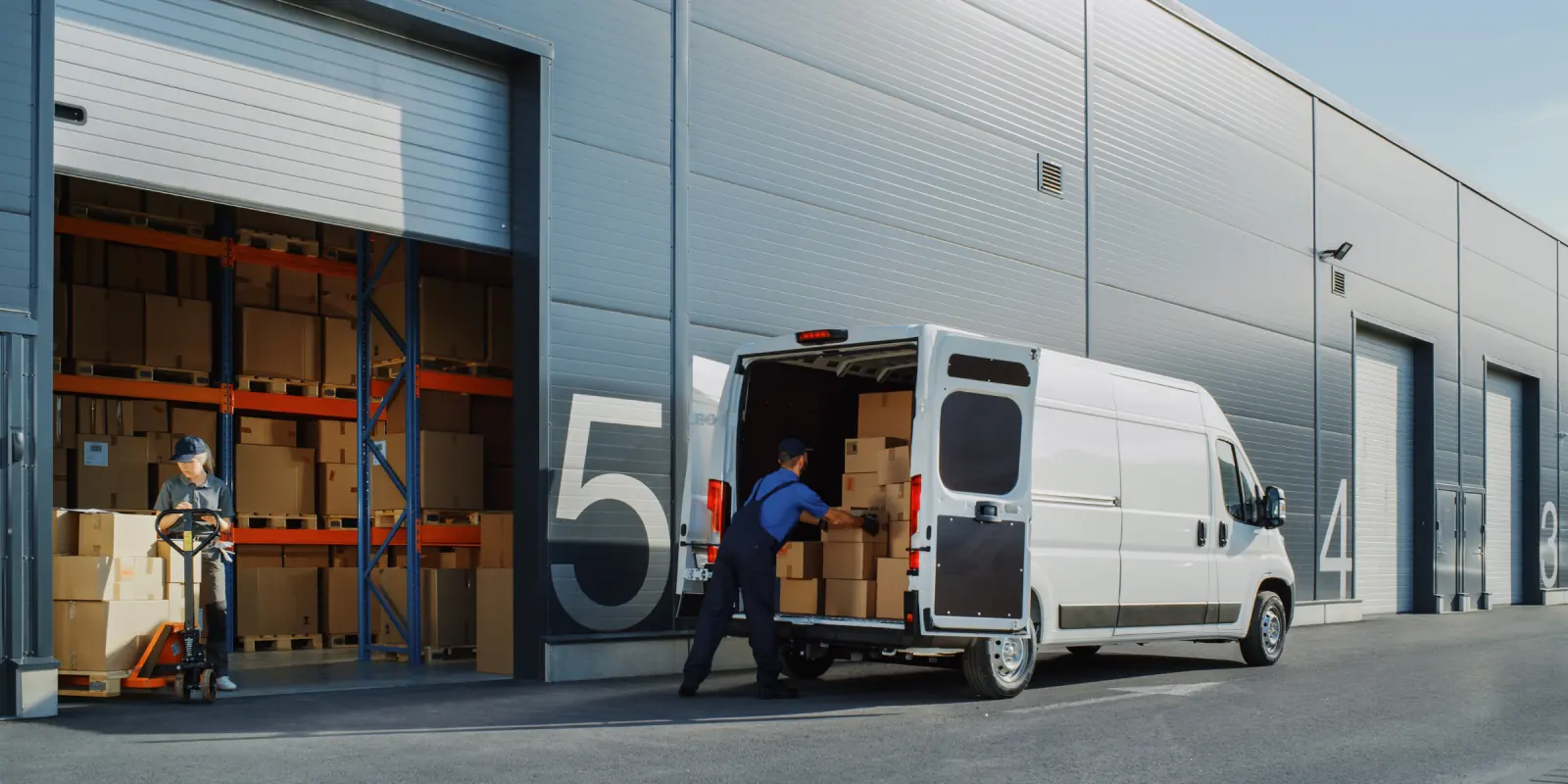
FCA means Free Carrier. It is a useful trade term when the buyer wants to control the main freight but does not want to take over export formalities in the supplier's country.
The important part of an FCA quote is not only the three letters. It is the named place that comes after them.
FCA supplier factory, FCA forwarder's warehouse, and FCA Shanghai terminal can create three different shipping arrangements. They can change who pays for the first truck, who loads or unloads the cargo, when risk transfers, and which party is expected to provide documents.
That is why FCA works best when the handoff is described in practical terms, not left as a city name on a quotation.
Quick answer
Under Incoterms® 2020, FCA means the seller delivers the goods to the carrier or another party nominated by the buyer at an agreed place. The seller handles export clearance where it is required. The buyer normally arranges and pays for main carriage, import clearance, duties, taxes, and delivery after the agreed FCA point.
The delivery point matters because it determines when delivery is complete and when risk moves to the buyer.
Why this matters for buyers
FCA's flexibility is also where misunderstandings begin. “FCA at the factory” means the seller's delivery obligation is completed at the supplier's premises, while “FCA at a forwarder's warehouse” means the seller may need to arrange and pay for transport to that warehouse first.
In practical terms, buyers should clarify:
- Where the goods will be handed over.
- Who arranges the first leg from the factory.
- Who loads the cargo at the seller's premises.
- Whether the buyer's carrier will collect or the seller will deliver.
- When risk transfers and what insurance starts from that point.
- Which export documents the supplier will provide.
An FCA price cannot be compared properly until these assumptions are written down.
How FCA works at different named places
There are two common FCA setups.
FCA at the supplier's factory or warehouse
When the named place is the seller's premises, the seller delivers when the goods are loaded onto the vehicle arranged by the buyer or the buyer's nominated carrier. The buyer's forwarder then manages the next stage of transport.
This can suit a buyer whose forwarder regularly collects from the factory or is coordinating several pickups in the same region.
FCA at another agreed place
When the named place is a forwarder's warehouse, container terminal, or another location, the seller normally arranges transport to that place. Delivery occurs when the goods arrive on the seller's vehicle, ready to be unloaded and made available to the buyer's nominated carrier or party.
The seller does not automatically take responsibility for every service at that location. Loading, unloading, warehouse handling, and appointment requirements should be confirmed with the forwarder and written into the shipping instructions where needed.
The difference may sound technical, but it directly affects origin trucking cost, cargo handling, and the point at which the buyer carries the risk.
What to put in an FCA quotation
Avoid writing only FCA China on a purchase order. Even FCA Shanghai may be too vague for the supplier and forwarder to act on.
A clearer line would be:
FCA ABC Logistics Warehouse, 88 Example Road, Shanghai, China — Incoterms® 2020
The quote or purchase order should also state:
- Exact delivery address and contact person.
- Whether the supplier is delivering to the forwarder's warehouse or the forwarder is collecting from the factory.
- Who loads at the factory and who unloads at the named destination.
- Cargo-ready date, pickup appointment, and warehouse receiving hours.
- Carton count, dimensions, gross weight, net weight, CBM, and pallet details.
- Shipping marks, labels, and palletization requirements.
- Export documents required by the forwarder.
- Which costs are included before the handoff and which costs begin afterward.
This is more useful than treating FCA as a price-only abbreviation.
A practical FCA consolidation example
A U.S. buyer purchases products from four factories in eastern China. The buyer already works with a freight forwarder that operates a consolidation warehouse near Shanghai.
Rather than asking each factory to arrange international freight separately, the buyer may request:
FCA [Forwarder's Warehouse Address], Shanghai, China — Incoterms® 2020
Each supplier prepares the goods, completes the required export procedures, and delivers its cartons to the agreed warehouse. The buyer's forwarder then consolidates the cargo and arranges the main shipment.
FCA does not automatically create a consolidation service. The buyer still needs to confirm that each supplier can meet the warehouse's receiving rules, booking schedule, labeling requirements, and carton-data deadlines.
The arrangement can be practical when the buyer wants one forwarder managing the international movement, but it should be costed against alternatives. A supplier may charge more under FCA to cover delivery to the named warehouse, while a factory pickup arrangement may be less expensive if the buyer's forwarder already operates local collection routes.
FCA vs. EXW
With EXW (Ex Works), the seller makes the goods available at its premises or another agreed place. The seller is generally not required to load the buyer's collecting vehicle or clear the goods for export.
With FCA, the seller handles export clearance where required. If FCA is named at the seller's premises, the seller also completes delivery when the cargo is loaded onto the buyer's arranged transport. If FCA is named elsewhere, the seller delivers to that point according to the agreed handoff.
For an overseas buyer, that export-clearance difference can be important. The buyer may have a capable freight forwarder but still be poorly positioned to complete export procedures in the supplier's country.
FCA is not automatically cheaper or better than EXW. Compare the total cost of factory pickup, export handling, documentation, origin transport, main freight, and any warehouse fees. The more useful question is which party can perform each step reliably.
FCA vs. FOB
FOB (Free On Board) is designed for sea or inland-waterway transport. Delivery and risk transfer when the goods are placed on board the vessel at the named port of shipment.
FCA can be used for road, air, rail, ocean, or multimodal transport. Delivery occurs at the agreed FCA point, which may be a factory, warehouse, terminal, or another location before the cargo is loaded onto the vessel.
That distinction matters for container shipments. A container may be handed to the carrier or terminal well before it is physically loaded onto the ship. If the real handoff takes place at the terminal, FCA may describe the shipment more accurately than FOB.
The right term depends on the actual logistics plan, the forwarder's preferred handoff, the quote assumptions, and the insurance coverage. Do not choose FOB only because the shipment will eventually travel by ocean.
When FCA makes sense for buyers
FCA is worth considering when:
- You already work with a freight forwarder you trust.
- Your forwarder consolidates products from several suppliers.
- You want one logistics partner managing cargo from a sourcing region.
- You have negotiated your own main-freight rates.
- The shipment will use multiple transport modes.
- You want the supplier to handle origin export clearance while you control the freight after the handoff.
It may be less convenient when the supplier has a well-organized FOB program and your forwarder prefers to take control only at the port, or when the named FCA point creates extra origin trucking and handling that is not reflected in the quote.
A documentation detail for letters of credit
Incoterms® 2020 includes an FCA provision that can help when a bank or documentary-credit arrangement requires an on-board bill of lading.
The parties may agree that the buyer instructs its carrier to issue an on-board bill of lading to the seller after the goods have been loaded onto the vessel. This does not happen automatically. It needs to be discussed with the seller, carrier, forwarder, and bank before the purchase order is finalized.
For ordinary shipments, this may never be relevant. For a letter-of-credit transaction, it should be addressed early because the FCA delivery point can occur before vessel loading while the bank may still require an on-board document.
Questions to ask before accepting FCA
Before production is finished, ask the supplier and forwarder:
- What exact named place is used for FCA?
- Who is responsible for the first truck from the factory?
- Who loads the cargo, and is loading included in the quote?
- When and where does risk transfer?
- Who handles export clearance and which documents will be provided?
- What cargo-ready date and delivery appointment are required?
- What carton data, labels, pallet details, and shipping marks does the forwarder need?
- Which charges remain with the buyer after the FCA handoff?
- Does the chosen insurance begin at the actual risk-transfer point?
- How does the complete cost compare with EXW and FOB?
These questions turn a general trade-term discussion into a shipment plan.
Where FCA gets misused
FCA without a clear named place can cause the supplier, buyer, and forwarder to expect different handoff points. Buyers sometimes use FCA and FOB interchangeably even though the handoff mechanics differ.
The most common problems are practical rather than theoretical:
- The purchase order names a city but not a delivery address.
- The factory assumes the buyer's forwarder will collect, while the forwarder expects delivery.
- The supplier quotes FCA but has not included local delivery to the named warehouse.
- Carton dimensions or pallet data arrive after the warehouse booking deadline.
- The buyer assumes the seller will unload at a third-party warehouse.
- The forwarder receives cargo without the correct marks or export documents.
None of these problems is solved by using the abbreviation more confidently. They are solved by documenting the handoff.
How Funda Sourcing supports this step
Funda Sourcing can help buyers organize supplier quote details, forwarder instructions, carton data, cargo-ready dates, and handoff questions. The goal is to make sure the trade term matches the route the cargo will actually take.
That can include:
- Comparing FCA, EXW, and FOB assumptions on a landed-cost basis.
- Confirming the named place with the supplier and forwarder.
- Coordinating packing, labels, shipping marks, and carton information.
- Making sure export documents and cargo-ready timing are aligned.
- Keeping supplier, buyer, and logistics contacts working from the same instructions.
Buyers should still confirm trade-term interpretation, customs requirements, and insurance with their freight forwarder or customs broker before booking cargo.
Funda's sourcing services can support the supplier and logistics coordination around that decision.
For related handoff questions, compare FCA versus FOB, EXW meaning, and Incoterms explained.
Frequently Asked Questions
Funda take
FCA is flexible because the buyer can nominate the carrier and agree on a practical handoff point. That flexibility only helps when the address, loading responsibility, export documents, cargo-ready date, and cost boundary are clear.
If your freight forwarder is consolidating goods from several suppliers, FCA may be a useful way to keep the origin handoff organized while leaving export clearance with the seller. If you are comparing it with EXW or FOB, compare the complete shipment plan rather than only the unit price.
The term works only as well as the details written after it.
Need help choosing an FCA handoff?
Funda helps buyers define the delivery point, coordinate suppliers and forwarders, and document the shipping responsibilities before production is finished.

