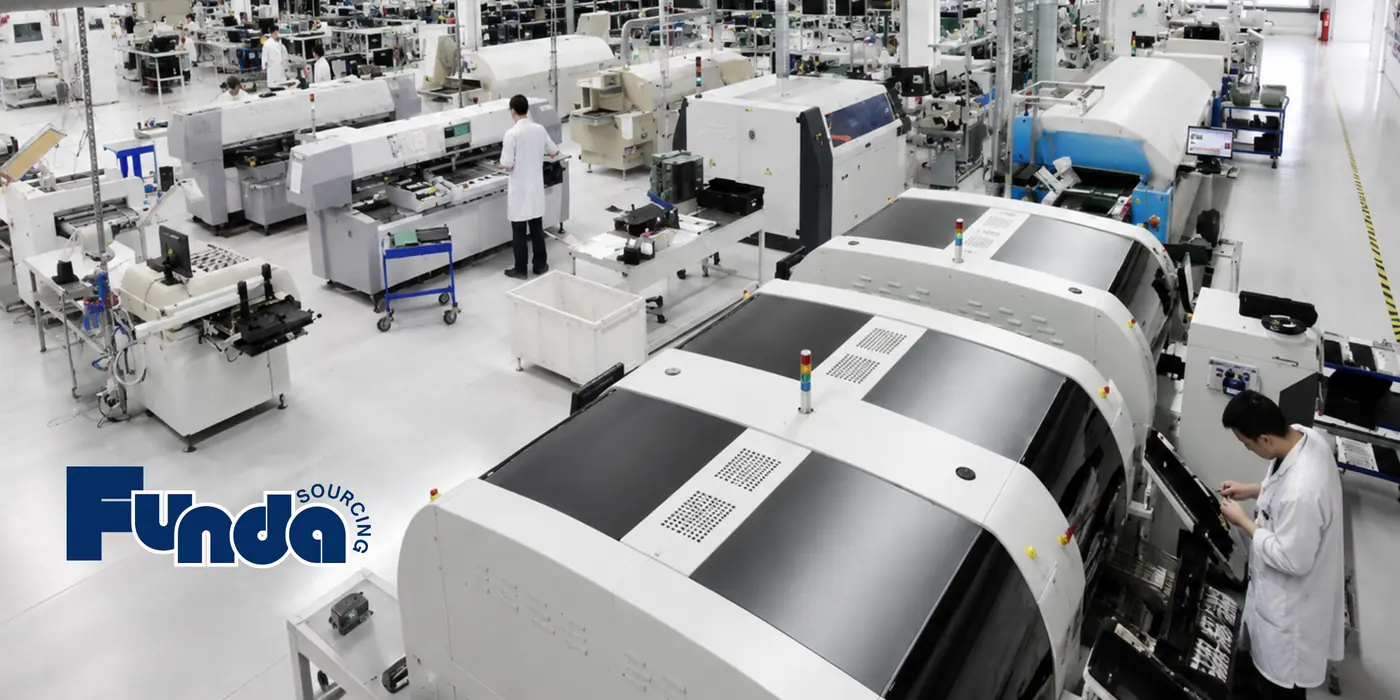
The two expensive mistakes are easy to recognize in hindsight. One buyer books a trip before the first sample arrives, tours four factories, takes a lot of photos, and comes home no closer to knowing which supplier can hold the required tolerances. Another buyer never visits, pays for a mold, and later discovers that the “factory” on the sales rep's profile is a trading office and the workshop making the product is somewhere else.
A factory visit is a tool. It answers some questions extremely well and does very little for others. The useful decision is not simply whether visits are good. It is whether this order has a question important enough to justify one.
Quick answer
Request a factory visit when the supplier's real capability, production setup, or ownership of the work could change your decision—and when the order is valuable or risky enough that a mistake would be expensive.
For a standard catalog product and a modest first order, start with supplier checks, samples, a live video walkthrough, and an inspection plan. A visit becomes easier to justify when you are paying for tooling, developing a custom product, placing a large order, dealing with compliance-sensitive goods, or finding that the supplier's story does not quite line up.
What a factory visit tells you that a document cannot
Documents can show that a company is registered. Samples can show that someone made one good unit. Neither tells you what happens on a normal production day when your order is one of several running through the building.
On site, you can look at:
- Whether the supplier makes your product in-house or sends the work elsewhere.
- Whether the equipment, workforce, and production space match the supplier's claims.
- Whether the factory has real experience with your product category and process.
- Where quality checks happen, what operators actually inspect, and how rejected goods are handled.
- Whether the packaging area and warehouse are set up for the way your goods need to ship.
- How the factory's engineers and production managers respond to technical questions.
The last point is easy to underestimate. A supplier that asks sensible questions about your end market, materials, tolerances, packaging, and inspection requirements is giving you more useful information than one that agrees to everything without asking how the product will be used.
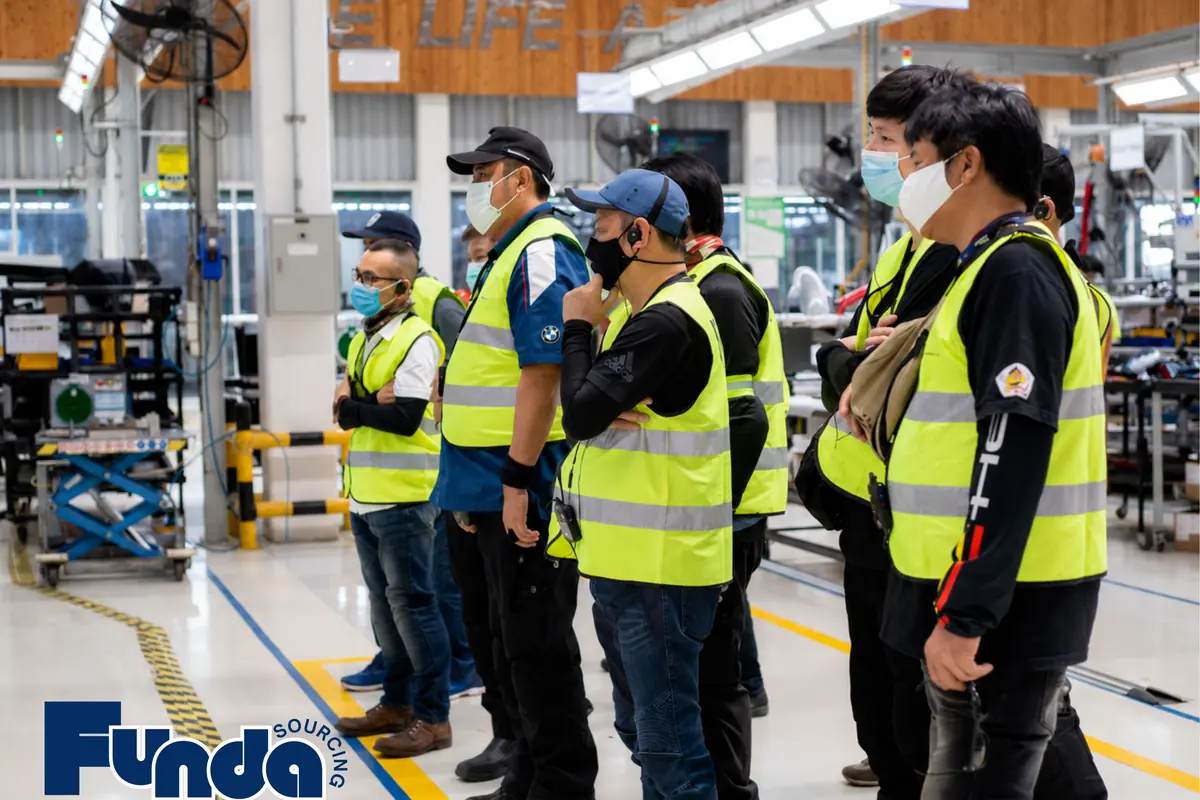
When a visit is worth the money
There is no universal order-value threshold. A smaller order with expensive tooling or serious compliance exposure may deserve more due diligence than a larger order for a simple, established product.
These are the situations where an on-site visit usually earns its cost.
You are paying for tooling
Molds, dies, custom fixtures, and other dedicated tooling make changing suppliers harder. Once that asset is paid for and sitting in someone else's building, you want to understand who owns it, who will use it, and whether the factory has the equipment and process knowledge to run it.
A visit is not the only way to check this. A clear tooling agreement, photos or video of the actual equipment, and a third-party audit may be enough for some projects. But if the tooling investment is meaningful, seeing the operation before committing is much easier to justify.
The product is custom
Catalog goods have a reference point. You can compare samples to an existing product and see whether the supplier has made something similar before.
Custom work depends on engineering, process control, and repeatability. A sample made slowly by an engineer does not prove the factory can produce the same result at volume. If the project involves new materials, specialized assembly, a new formula, or several suppliers making different components, a visit can expose capability gaps early.
A bad production run would hurt the business
A failed shipment can mean different things to different buyers. For one, it is an inconvenient reorder. For another, it means a missed launch, a retailer chargeback, or a quarter of tied-up cash.
When the financial exposure is significant, the cost of additional verification should be compared with the cost of being wrong—not just with the price of a plane ticket.
The product carries quality or compliance risk
Electrical products, children's goods, food-contact items, chemical formulations, and products with strict testing requirements deserve more than a polished sample and a general factory profile. A visit may help you understand material storage, production controls, testing equipment, and traceability.
It is still only one part of the work. Product testing, document review, certification checks, and an inspection of the actual order may matter more than the visit itself.
Something about the supplier does not add up
Pay attention when the legal company address is different from the production address, the payment entity does not match the contract, or the supplier keeps redirecting you to an office instead of the workshop. A quote that is far below the market can also deserve a closer look if nobody can explain the difference.
None of these signs proves that a supplier is dishonest. They do mean you should either verify the gap or walk away. A factory visit can be the quickest way to answer the question, provided you are visiting the site that will actually handle your order.
You expect a long relationship
If a supplier may be producing for you for several years, an early visit can be both due diligence and relationship-building. Meeting the people who will handle engineering, production, and quality often makes later communication more direct.
That is a legitimate reason to travel. Just keep the purpose clear: a relationship visit is not the same thing as a capability audit, and neither replaces an inspection.
When a visit is probably not the right next step
A visit is not automatically the most responsible choice. It is often the wrong tool when:
- You are buying a standard catalog product in a modest quantity and have not yet reviewed a sample.
- The open question is whether a test report, certificate, or social-compliance audit is valid. That calls for document verification or the right type of audit.
- You do not yet know what you want to see. A visit without a question list usually becomes a showroom tour.
- The supplier has not passed basic checks on identity, product fit, communication, payment details, and sample quality.
- The factory is closed or operating unusually during a major holiday period. A quiet floor may tell you more about the calendar than about normal capacity.
If the real concern is whether the goods will meet your requirements, a pre-shipment inspection may be more useful than a visit months earlier. These checks answer different questions:
| Check | Main question it answers |
|---|---|
| Factory visit | Who is this supplier, and how does the operation work? |
| Factory audit | Does the site meet a defined verification scope? |
| Sample approval | Can the product meet the agreed specification? |
| Production inspection | Do the goods made for this order meet the requirements? |
Run the cheaper checks first
Most buyers can narrow the decision from their desk. Before booking travel, work through the basic verification:
1. Check the legal and payment entities. The company name on the business license, contract, invoice, and bank account should be explainable and consistent. Confirm who will manufacture the goods and who will receive payment. 2. Ask for a live video walkthrough. Choose a specific time and ask the supplier to walk from the production floor to the warehouse. Ask to see the machine or process relevant to your product. Notice what they cannot or will not show. 3. Request more than one sample when consistency matters. A single sample proves very little about repeatability. Samples from different production runs or revisions can reveal whether the supplier controls the details. 4. Use a third-party audit when you need independent eyes. A basic supplier verification, capability audit, and social-compliance audit are different services. Define the decision the report needs to support before ordering one. 5. Use a local representative when appropriate. Someone already in the region can often visit a short-listed supplier for a fraction of the cost of an overseas trip. Give them a specific brief; a folder of factory photos is not a useful report unless the photos answer your questions.
If these checks resolve the concern, you saved the trip. If they do not, you now know exactly what you are traveling to verify.
What to look at during the visit
A good visit is not a tour of the showroom. The showroom is often the easiest part of the factory to prepare.
Ask to see the areas that connect directly to your order.
Production floor
Does the equipment match the product and process you discussed? Are the relevant lines running? Does the factory look like it regularly makes this category, or are you being shown a general-purpose facility with no clear connection to your order?
If the supplier says a process is done in-house, ask to see it. If a particular machine is supposed to be used, ask which one and why.
Raw materials and work in progress
Look at how key materials are labeled, stored, and released to production. Work in progress can be more informative than a finished sample because it shows the actual process rather than a carefully prepared example.
Ask where materials for similar orders came from and how the factory handles mixed lots, substitutions, and leftover stock.
Quality control
Do not stop at “we have a QC department.” Ask where inspection happens, what is checked at each stage, and what happens when a product fails.
Depending on the product, that might include dimensions, weight, appearance, function, strength, leak resistance, electrical performance, or laboratory testing. There is no single quality system that fits every product. The important question is whether the checks make sense for yours and whether the results are recorded.
Packaging area
Packaging deserves more attention than it usually gets. Incorrect labels, carton quantities, barcodes, inserts, retail boxes, and export cartons can create problems even when the product itself is fine.
For ecommerce orders, packaging is part of the product. Check whether the factory understands your carton marks, barcode requirements, packing method, and receiving constraints.
Warehouse and production records
The warehouse can help confirm what the factory actually produces and how finished goods are stored. If possible, ask to see a similar order in progress and the records used to release goods.
You do not need to treat the visit like an interrogation. You do need to compare what you see with what the supplier promised.
What a factory visit will not prove
A clean floor is not proof of good production. A factory can look excellent during a visit and still ship a poor batch later. The reverse can also happen: a practical, untidy workshop may consistently make good products.
Three limits are worth keeping in mind:
- The showroom sample may not have been made on the production line. It may have been built slowly by the engineering team using the best available material.
- The factory may show you the operation it wants you to see. Ask for the production floor, warehouse, current work in progress, and the process tied to your order.
- Capability on the day of the visit is not the same as quality on the day your order ships.
That last point is why a factory visit never replaces an approved sample, written specifications, change control, and a production or pre-shipment inspection. A visit helps you understand the supplier. Inspection helps you understand the goods being made for you.
A practical example
Imagine a buyer developing a custom plastic household product. Several suppliers can quote it, and each one says it can handle the mold, materials, and volume.
There is useful work to do before anyone gets in a car: compare the quotations, verify the legal entities, review similar products, request samples, clarify mold ownership, discuss materials and packaging, and see how each supplier responds to technical questions.
That process may reduce five candidates to one or two serious options. A factory visit is much more valuable at that point. The buyer is no longer collecting business cards; they are checking the equipment, production flow, quality controls, and packaging setup of a supplier that may actually receive the order.
How Funda Sourcing approaches factory visits
We do not recommend an on-site visit for every supplier. We usually start with supplier research, quotation comparison, communication, samples, documentation, and technical questions. That removes a lot of uncertainty without anyone booking a flight.
When a project reaches the point where seeing the operation could change the decision, Funda's Asia-side team can coordinate a factory visit or on-site supplier verification for selected projects. The brief should come from the order, not from a generic checklist.
If the concern is capacity, we look at capacity. If the concern is outsourced production, we focus on who is actually making the product. If packaging has caused problems in the past, we spend time in the packaging area. The useful output is not a photo album; it is a clearer decision and a set of QC expectations that can be used after the visit.
For related checks, see how to background check a Chinese supplier, how to compare suppliers beyond Alibaba, and how to plan quality checks before production.
Frequently Asked Questions
The short version
Verify from your desk until the desk runs out of answers. If what remains could change the supplier decision—or if you are about to leave a mold or a large deposit in a building you have never seen—go and look.
Otherwise, put the budget into the checks that measure what you actually care about: a repeatable product, a documented process, and goods that meet the approved requirements when they ship.
Deciding whether a factory visit is worth it?
Funda's Asia-side team can help verify suppliers remotely, coordinate audits, and in some cases visit manufacturers directly for selected orders.

